
Video production quote: how to read it line by line
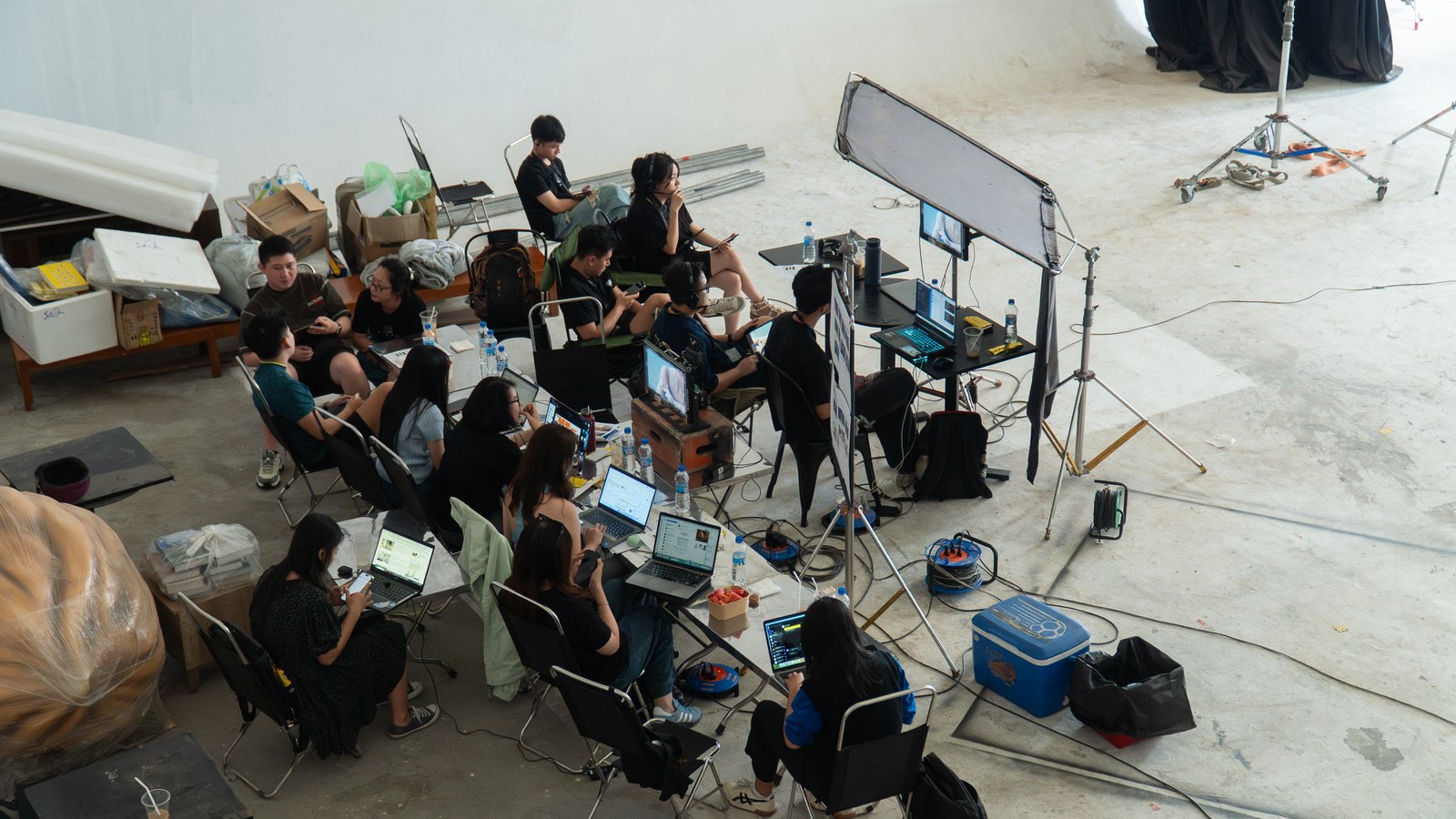
A video production quote is the plan for the film written as a price list. Read it as a plan and you can see how many days, how many people and how many versions you are buying before a single frame is shot.
Most quotes for a commercial follow the same order, because the order follows the job. This is how ours is laid out, and what to look for in each part.
The eight sections of a film quote
Our quotation sheet for a live-action film has eight sections. Other production companies name and group them differently. The AICP bid form, which many international agencies use, spreads transport across other lines and gives the director's fee, insurance and the production company's fee lines of their own. The contents rarely change.
Pre-production and production management. Producer, line producer, production assistants, location scouting, storyboard. This is the planning, and most of the saving is decided here.
Crew. Director, director of photography, camera operator, focus puller, assistant director, art director, sound.
Talent, make-up and wardrobe. Cast, casting, hair and make-up, styling. The cast lines carry the usage terms, which matter more than the day fee.
Location, studio and set design. Location fees, set build, props.
Transport. Equipment trucks and crew vehicles.
Equipment. Camera and lens packages, lighting, grip, generator, and the technicians who run them.
Post-production. Offline edit, online edit, colour grading, sound, voice, adapted versions.
Other. Catering and data backup.
Read the unit, not only the price
Every line has a unit, and the unit tells you what makes it grow.
Day lines multiply with shoot days. Crew, equipment, location and transport are almost all day lines, which is why a second shoot day is the most expensive single decision on the sheet.
Package lines are fixed for the job: production management, the director, scouting, the storyboard.
Person lines grow with the cast.
Video and version lines grow with the deliverables. A thirty-second film with two cutdowns and two more aspect ratios is five masters, not one.
If two quotes for the same script are far apart, the difference is nearly always in these four numbers: days, people, cast and versions.
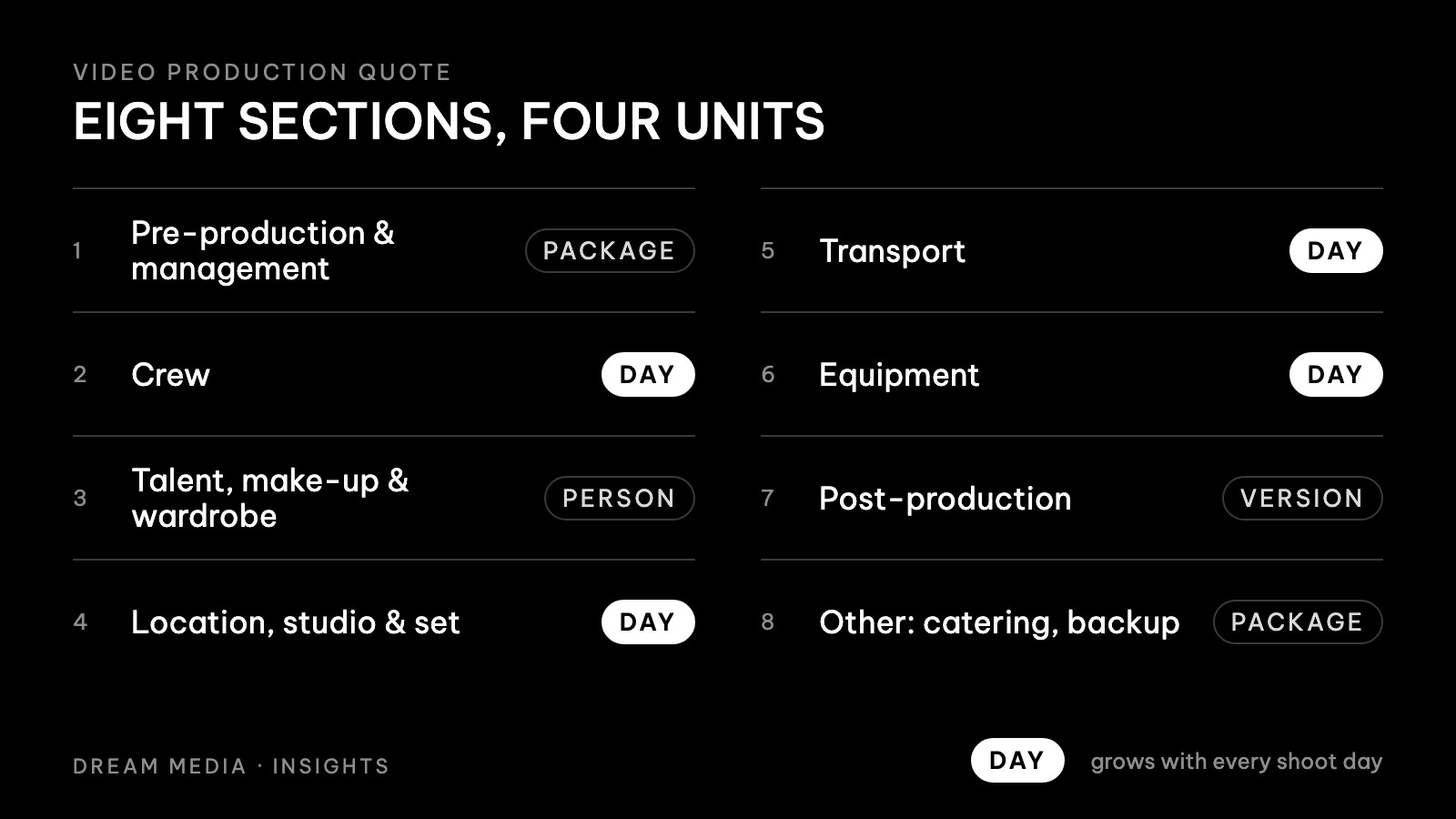
The eight sections of a film quote and the unit each is usually priced in. The day lines are the ones that multiply.
The lines that look small
Overtime. A shoot day has a fixed length, written in the terms. Past it, crew and equipment are charged by the hour as a share of their day rate. An ambitious shot list on a single day is how a cheap quote becomes an expensive invoice.
Usage. A talent line reads something like "image usage for twelve months, online, non-exclusive, Vietnam". Change any one of those four and the fee changes. We explain this in talent usage rights and buyouts.
Revisions. A quote covers a set number of rounds, or work up to an agreed cut. Anything beyond that is charged, and so is extra work caused by a change to the brief.
Adapted versions. Vertical and square versions are their own line. So are cutdowns. Decide the list of deliverables before the quote, not after the edit.
Rushes and project files. The finished masters are included. Raw footage and the edit project files are not, unless the quote lists them as deliverables. Supplying them is quoted separately.
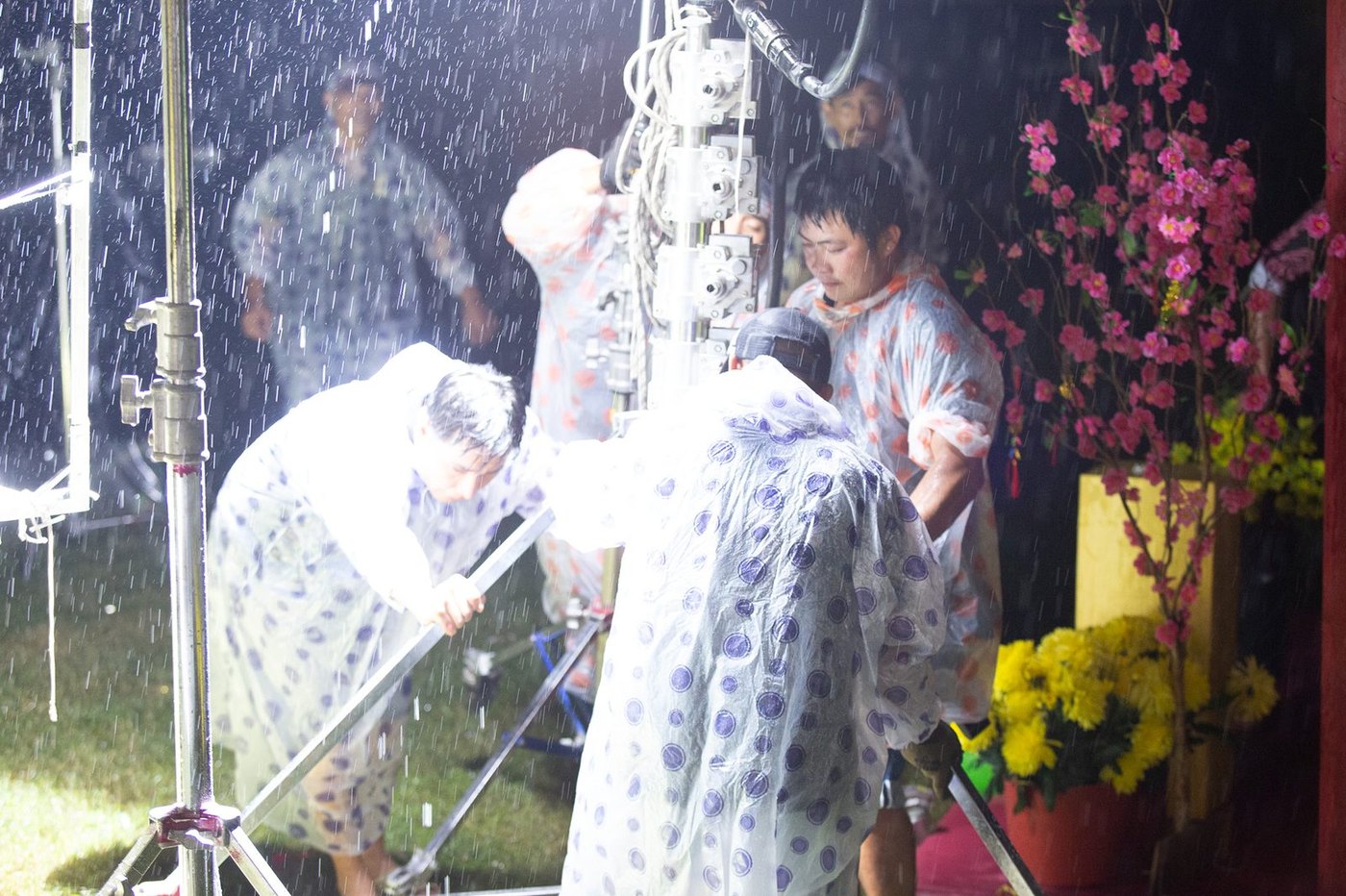
A rain rig on our Fanta Tết shoot. Effects like this sit under props and set design, and they are estimated from the script.
What the terms under the table decide
The small print below the total is part of the price. Read it for five things:
how long a shoot day is, and how overtime is charged;
when cancellation charges start, and how they rise as the shoot gets closer (see the pre-production meeting);
how many revision rounds are included;
what you are expected to supply, usually the product, artwork, logos and legal lines;
where the film may be shown.
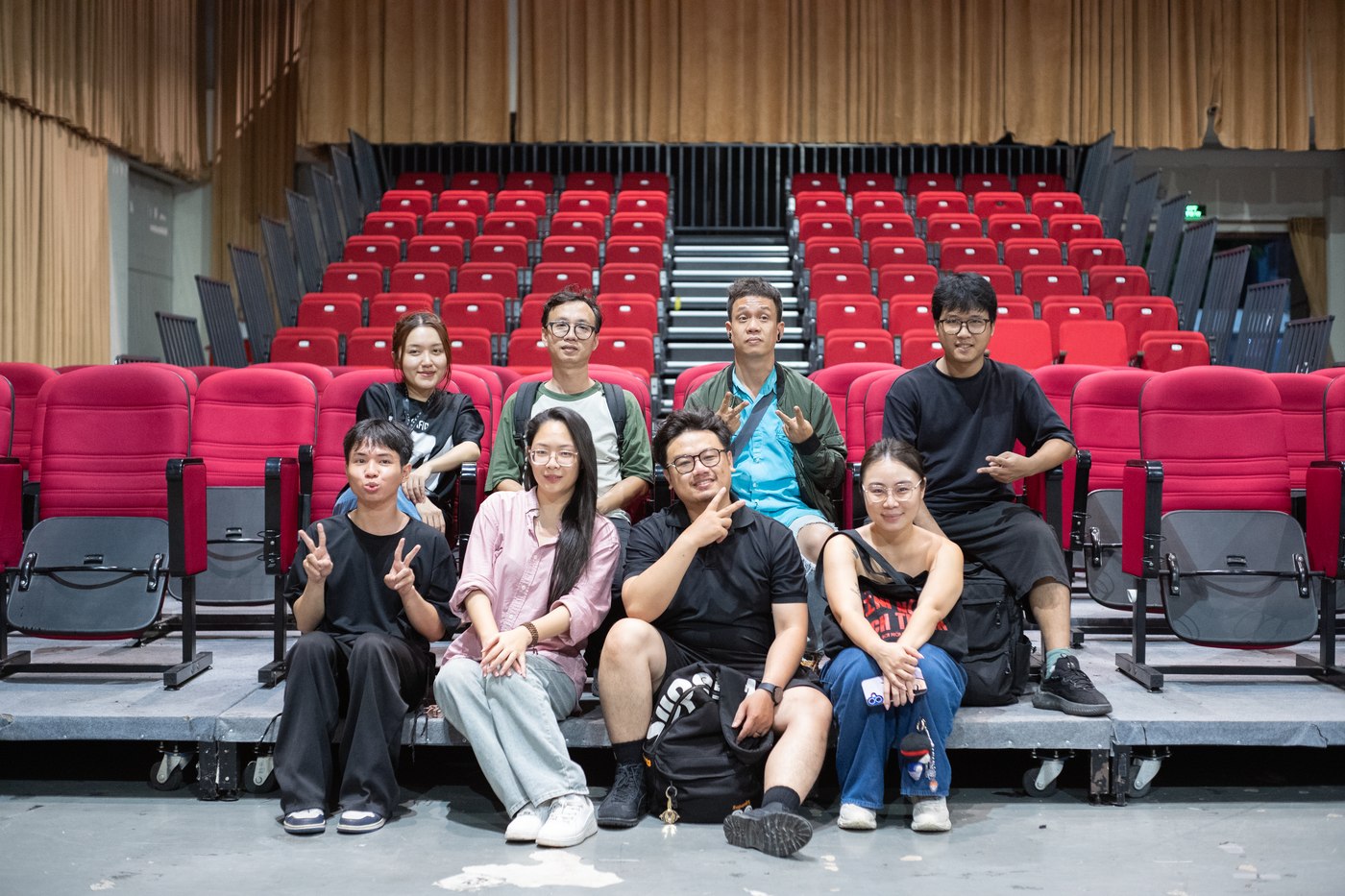
Part of the team on our Samsung Galaxy A56 shoot. Overtime, an extra day or a cancellation is charged on everyone a shoot books, which is why the terms under the table matter as much as the total.
How to compare two quotes fairly
Put them side by side and line up the same six numbers: shoot days, crew size, lighting package, cast and usage, number of masters, revision rounds.
A lower total usually means one of those is smaller. That may be exactly right for the job. It should be a choice, and you should be able to see it.
Ask each company to quote the same production brief. Without that, you are comparing three different films.
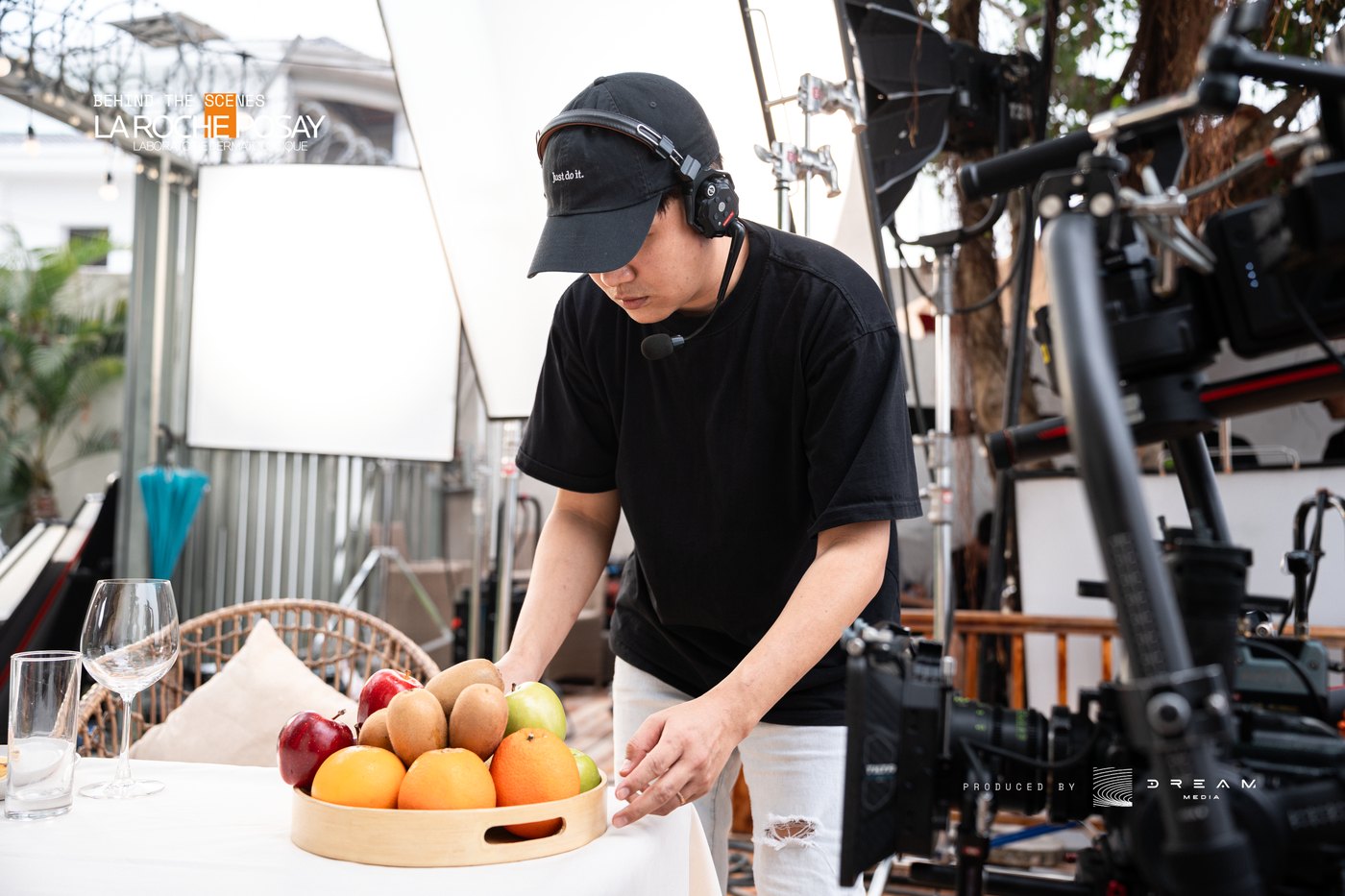
Props and food styling are lines on the quote too. Dressing the table on our La Roche-Posay series.
Where to cut without hurting the film
Cut set-ups before you cut crew. Fewer locations and fewer set-ups shorten the day, and the day is what you pay for.
Use library music unless the idea depends on the track.
Shoot film and stills together when they are the same picture. We covered when that works in film and stills from one shoot.
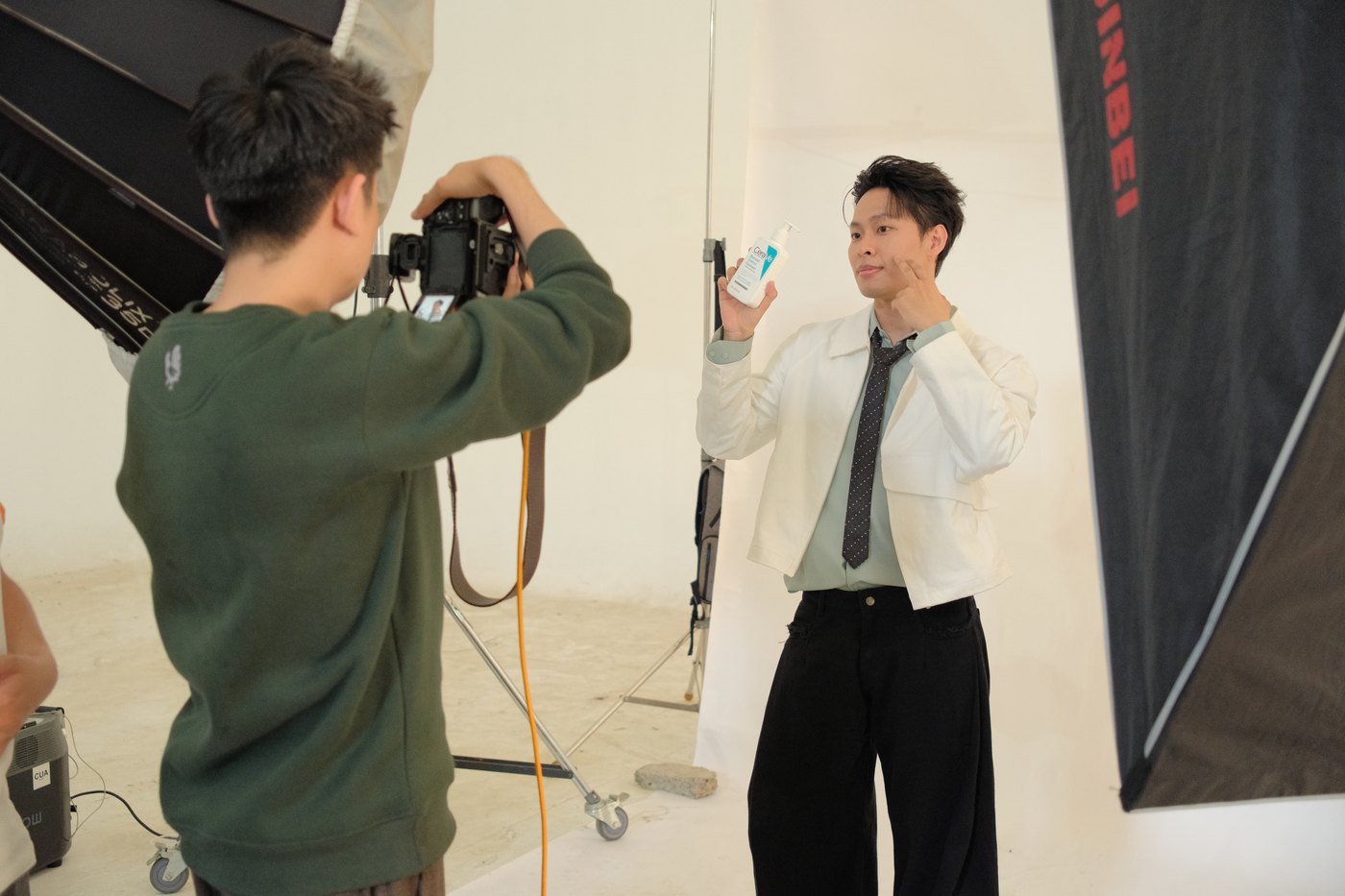
A stills photographer at work during a CeraVe studio shoot. When film and stills share a day, the photographer is a line of their own.
Do not cut pre-production. It is the cheapest section on the sheet and the one that protects all the others.
Quick answers
What do "offline" and "online" mean on a production quote?
Offline is the edit: choosing takes and building the story. Once it is approved, the picture is conformed at full resolution and graded. The online then adds the final effects, clean-up and on-screen text, while the sound is mixed alongside. The order is set out in the APA's offline glossary.
Why is the director a package and the camera crew a day rate?
The director works across the whole job: treatment, shooting board, the shoot and supervising post-production. The camera crew is paid for the days it is on set.
Is the product in the film included in the quote?
No. The product is supplied by the client, along with packs prepared for filming.
Dream Media develops, directs, shoots and finishes brand films in-house in Ho Chi Minh City. See TVC and digital production.