
PPM meeting: what a pre-production meeting must decide
The pre-production meeting, or PPM, is the last meeting before a shoot where changing your mind is free. Client, agency, production company and director go through every decision the film depends on and approve them together. After it, changes cost money.
What a PPM is
It is the final joint meeting of the preparation stage of a commercial. The production company presents everything prepared since the job was awarded, usually as one document called the PPM book, and the client approves it section by section.
On a larger job there are often two: an internal one between agency and production, then the final one with the client.
It is usually held about a week before the shoot. The European guidelines for commercial production put it at least seven days ahead and call it a confirmation meeting, not a creative one: everything approved still has time to be booked.
What a PPM book contains
The director's treatment, updated since the pitch.
The shooting board. Every shot, in order, drawn.
Casting. The recommended choice for each role and an alternative, on video.
Wardrobe, on the cast or as references, with colours checked against the brand.
Locations or set design. Photographs from the scout, or drawings of the build.
Props and product. Which packs, how many, and who prepares them for camera.
The schedule. Shoot days, call times, and the order of scenes.
Post-production. Music direction, voice, graphics, and the dates for each cut.
The deliverables list. Every length and aspect ratio.
Open questions. Anything not yet decided, with a name and a date beside it.
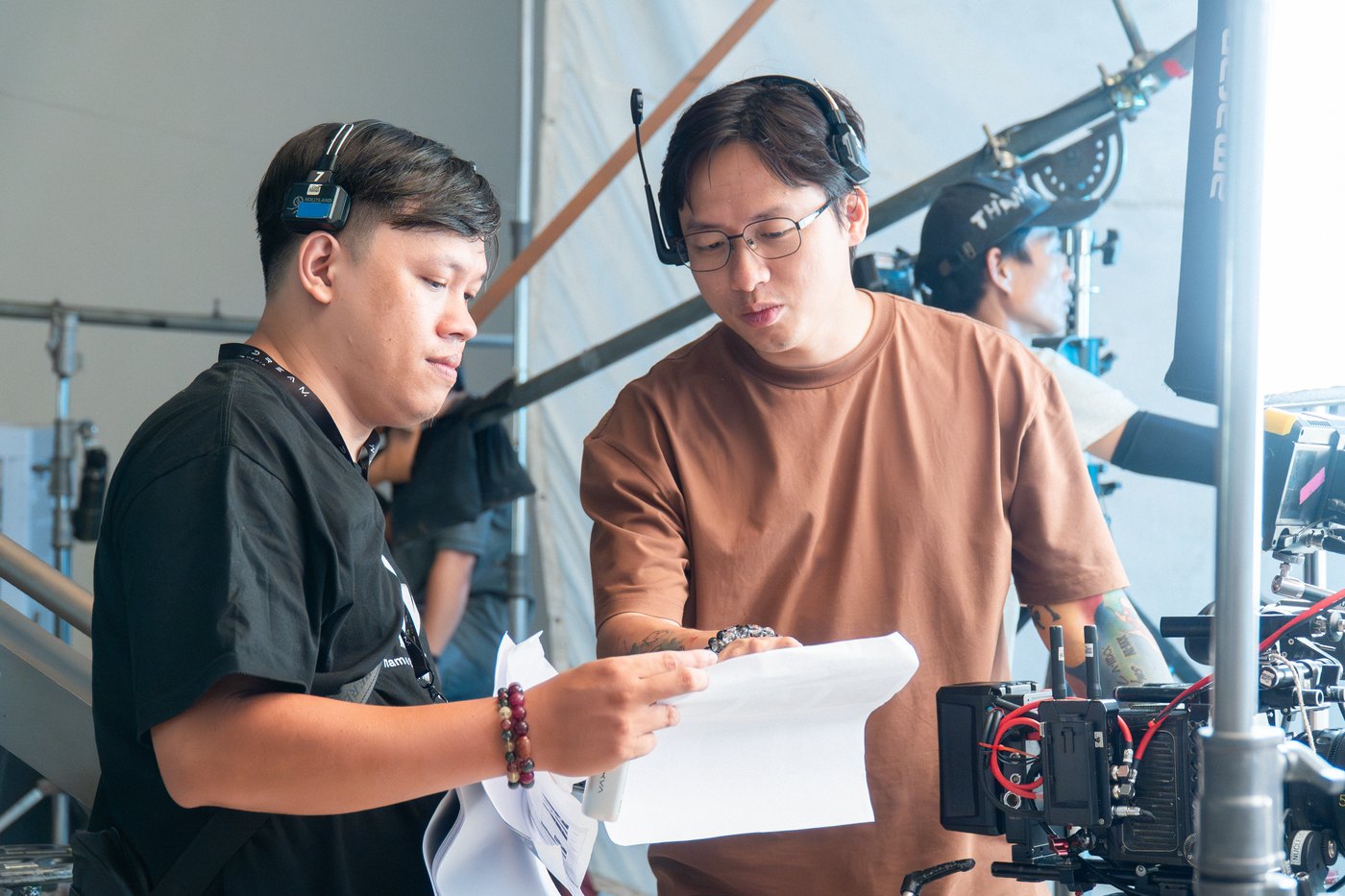
The director and the DOP walking the shot list on a Vaseline shoot. The schedule approved in the PPM is the one the crew runs on the day.
A PPM agenda that fits in two hours
Recap of the brief and the objective. Five minutes. It keeps every later decision pointed at the same thing.
Treatment and shooting board. Thirty minutes, shot by shot.
Casting. Fifteen minutes.
Wardrobe, locations or set, props and product. Thirty minutes.
Schedule and post-production dates. Fifteen minutes.
Deliverables. Ten minutes.
Open questions and who owns each. Fifteen minutes.
The board comes early because everything after it depends on it. A change to shot seven changes the wardrobe, the location and the schedule for the day.
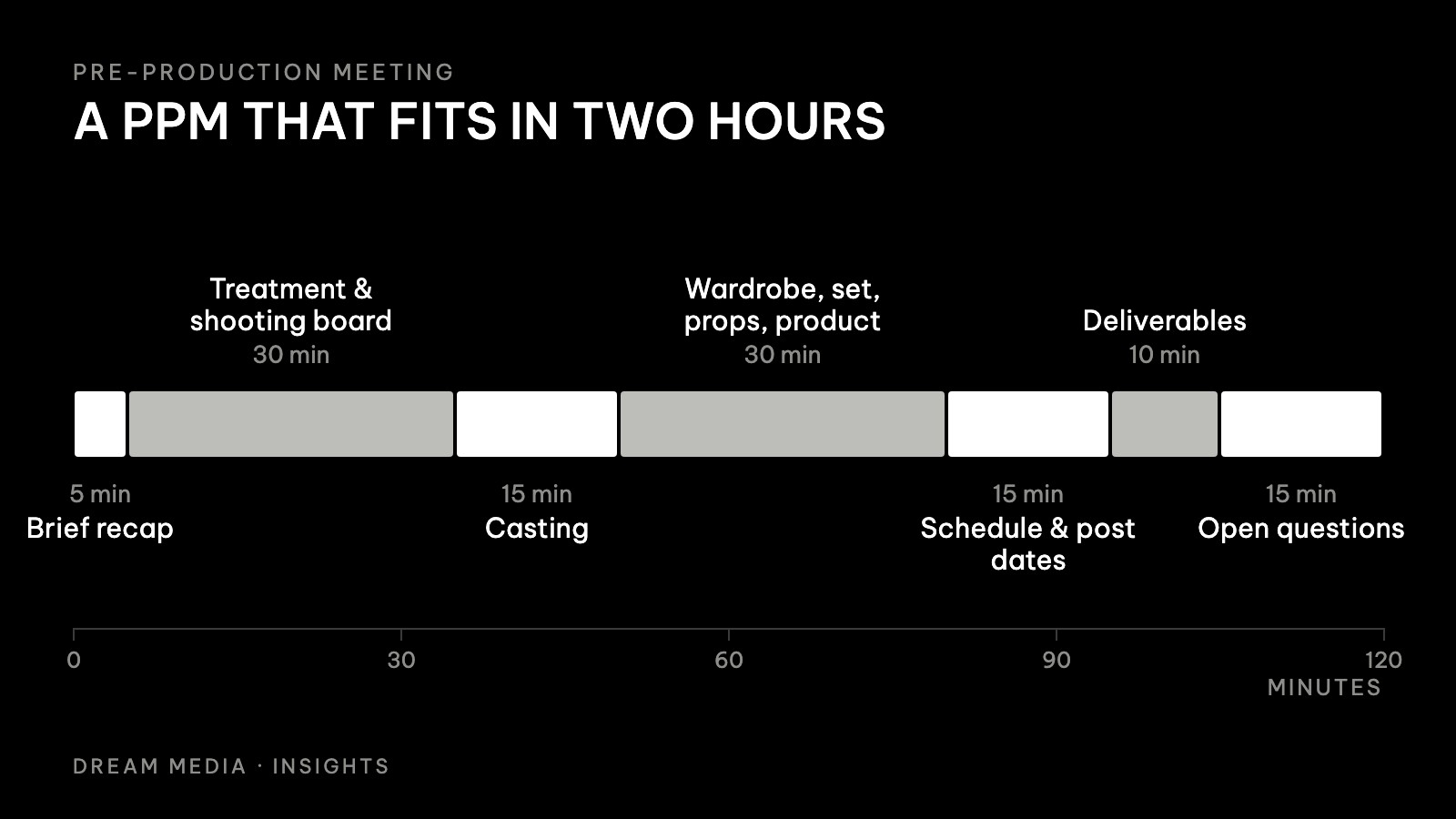
The two-hour agenda, to scale. The board takes the largest share because everything after it depends on it.
Who has to be in the room
The person who can say yes. That matters more than everyone else combined.
If the brand's final approver sends a deputy, every decision in the meeting is provisional. The real PPM then happens later by email, one comment at a time. If they cannot come, send them the book two days ahead and bring their answers into the meeting.
From the production side: the director, the producer, and the heads of department whose work is being approved, usually the director of photography and the art director.
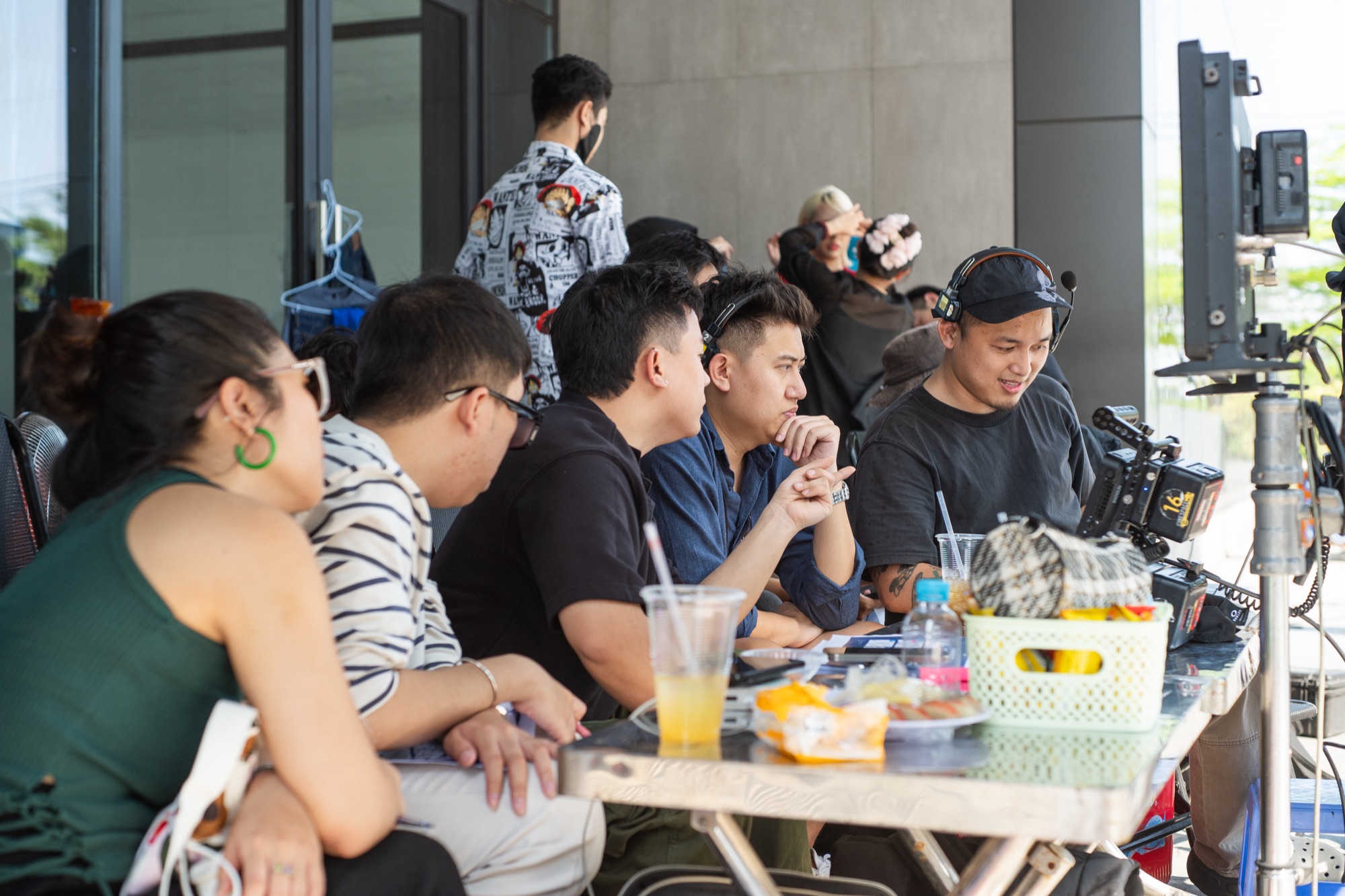
Agency, client and director at the monitors on our Samsung Galaxy S24 shoot. The people who approve takes on the day should be the people who sat in the PPM.
Why changes after the PPM cost money
Because the meeting is the point at which the production starts spending on your behalf. Cast are confirmed. Locations are paid for. The set goes into construction. Crew and equipment are booked for fixed dates.
That is why cancelling gets expensive from here. The standard UK production contract charges committed costs plus a share of the production company's fee that rises as the shoot gets closer: a quarter at twenty days or more, half at eleven to nineteen, all of it inside ten days. On our own quotes the charge steps up at the PPM. It is not a penalty. It is the point where the costs become real. See how to read a production quote.
How a PPM fails
"We will decide on the day." Anything left open is decided on set, with forty people waiting.
Too many options. Three wardrobe choices for each of five cast is fifteen decisions. Ask for a recommendation and one alternative.
The product is not final. A pack that changes after the meeting can mean reshooting every product shot. If the artwork is not locked, say so, and plan the product shots last.
Claims have not been checked. Any line on screen that makes a promise about the product should have been seen by legal or regulatory before the meeting, not after the edit.
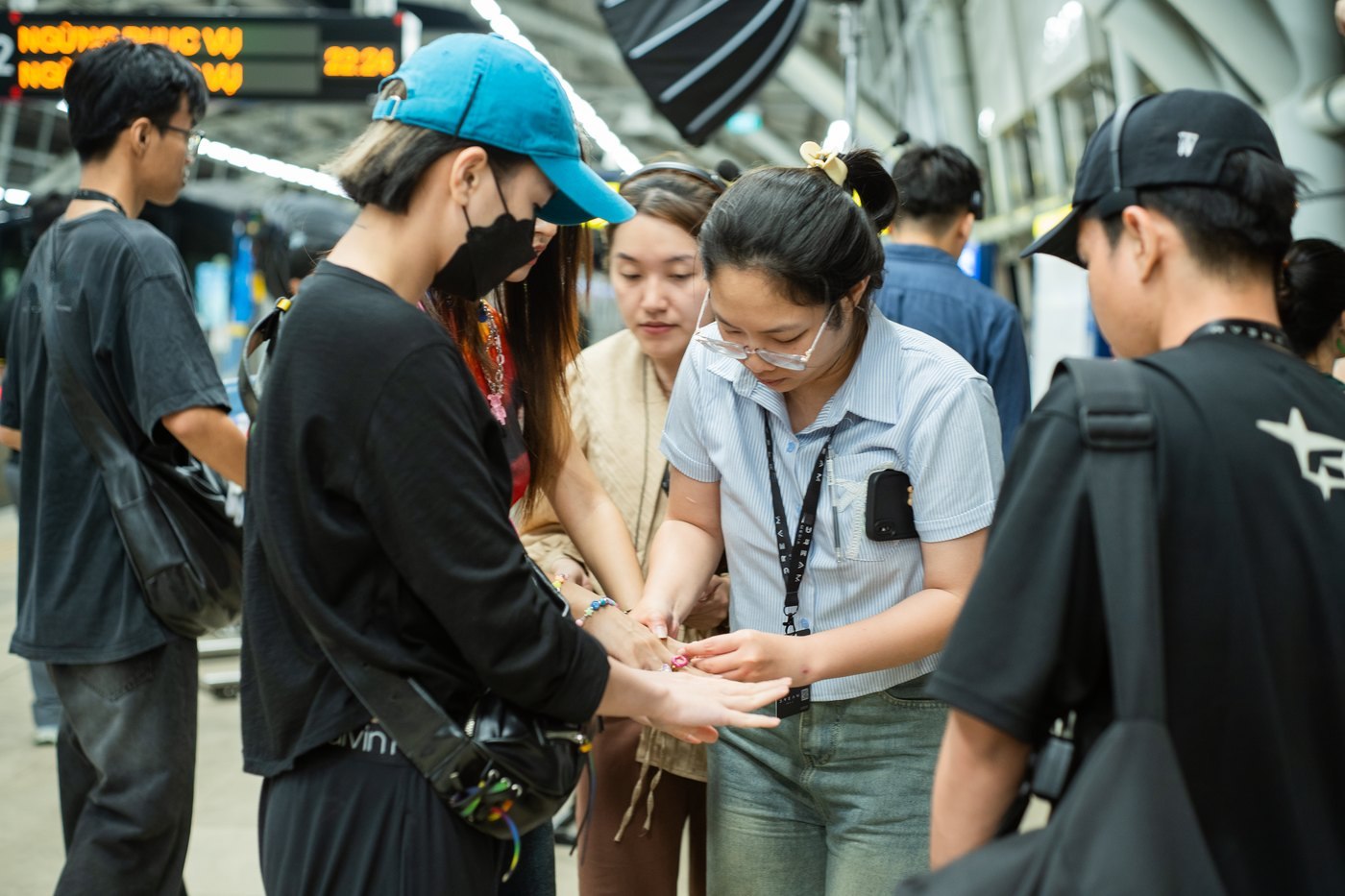
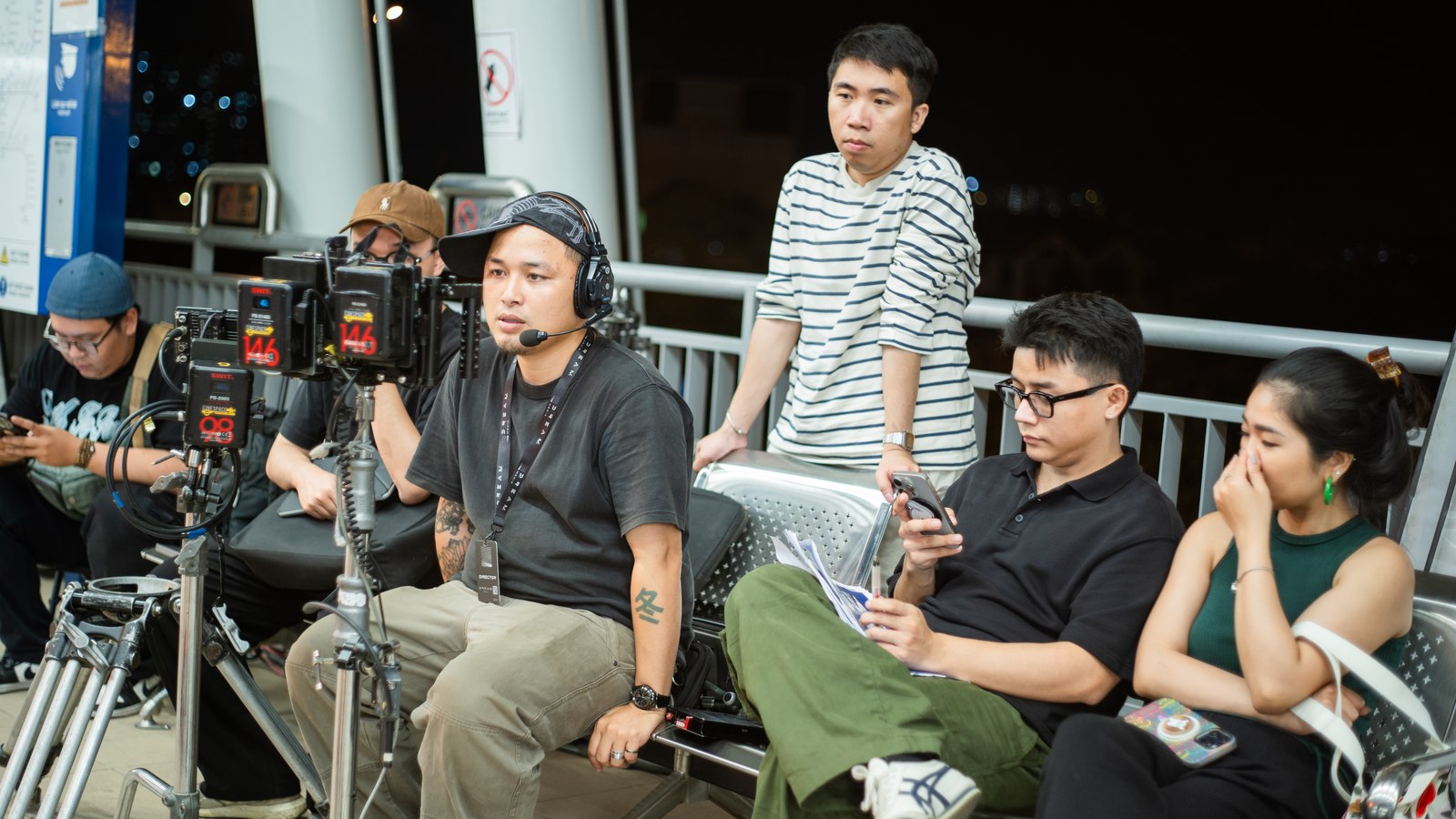
Going over a set-up on the platform during our Samsung Galaxy S24 shoot. Anything left open at the PPM gets decided like this, with the whole unit waiting.
Nobody wrote it down. The approved book, with changes marked, should be sent round the same day. It is the reference for every argument that follows.
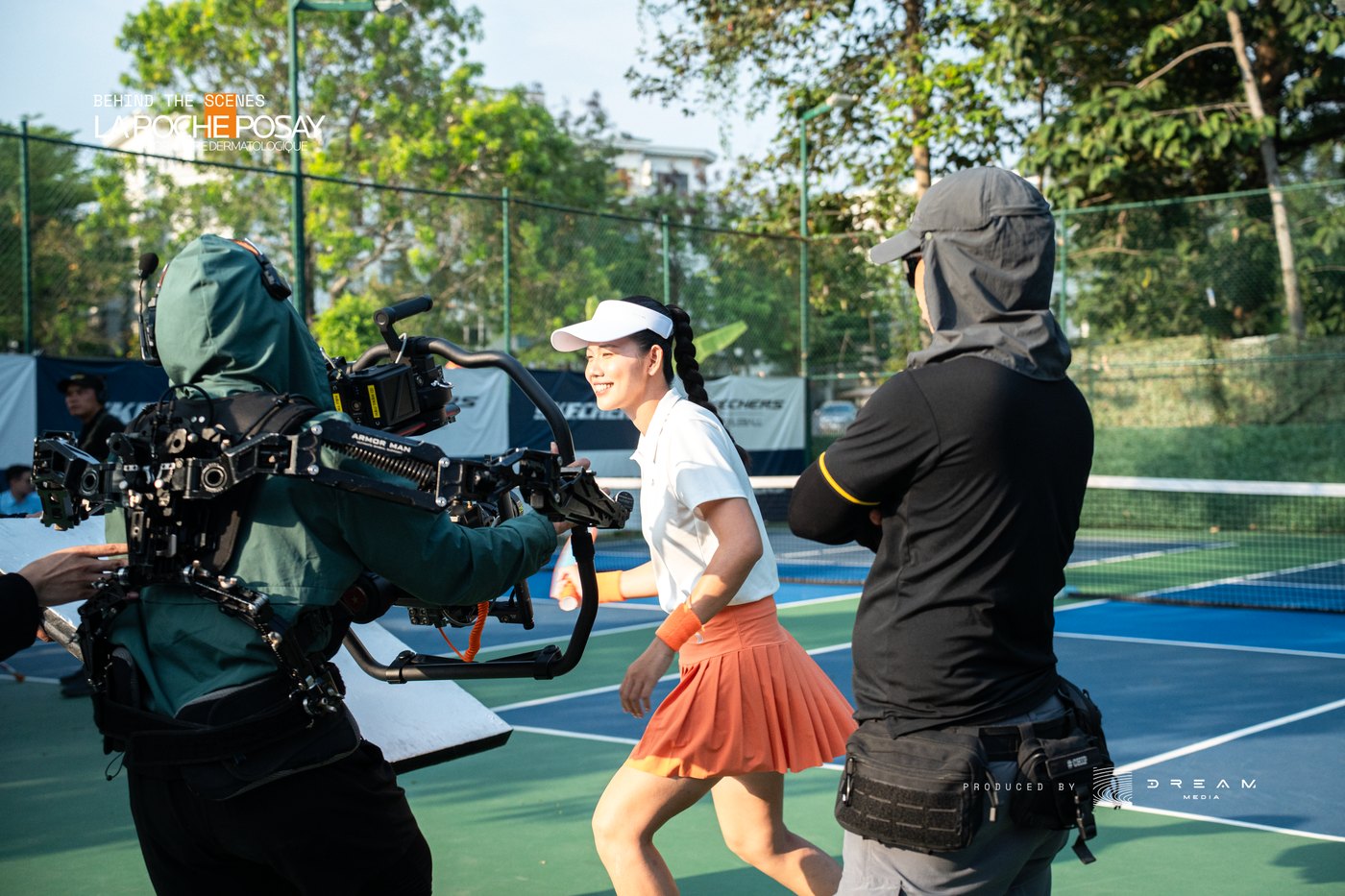
Running with the player on court for our La Roche-Posay series. A move like this is drawn on the shooting board and confirmed at the PPM, so on the day it takes minutes.
What happens between the PPM and the shoot
A wardrobe fitting with the confirmed cast.
A technical recce, where the director, the cinematographer and the gaffer walk the location and plan the day shot by shot.
On a studio job, a build day and a pre-light.
By the time the camera rolls, the shoot should be the carrying out of a plan everyone has already seen.
Quick answers
How long does a PPM take?
Usually two to three hours for a single film, longer for a multi-day shoot. Longer still if decisions that should have been made earlier are being made in the room.
What is the difference between a storyboard and a shooting board?
A storyboard sells the idea. A shooting board is the director's plan: every shot that will be filmed, in order, with framing and movement.
Can a PPM be held online?
Yes, and many are. Where colour matters, wardrobe and product should still be seen in person or on a calibrated screen.
Dream Media develops, directs, shoots and finishes brand films in-house in Ho Chi Minh City. Where the PPM sits in the schedule is in our TVC production timeline.