
Film and stills from one shoot: what it really takes
Asking for film and stills from the same shoot is the most common way to save money on a campaign, and the most common way to come home with one of the two done badly. Whether it works is decided by the idea, not by the schedule.
A campaign where it works
In October, McDonald's in Paraguay released a campaign called Impatience, by Oniria\TBWA, produced by Barraco Films. The observation is one everybody recognises: the food rarely makes it home untouched. Someone on a loaded scooter starts eating at the drive-through window. Someone in pyjamas and slippers is already into the bag in the lift.
It runs online, on social and in print, as photographs and as fifteen-second films of the same situations. One person is credited as both director and director of photography.
(Campaign details from Ads of the World.)
Why it works here
Each execution is one frozen moment. The photograph is the idea. The film is the same moment with a few seconds either side of it.
That is the condition. Film and stills can share a day when they are the same picture: the same frame, the same light, the same instant of performance. Then the stills are not an extra job squeezed in. They are the shot, held.
Most campaigns do not meet that condition, and the trouble starts when they are scheduled as if they did.
Where the two pull apart
Light. Film is lit with continuous light for a moving camera. A product still often wants flash, to freeze a pour or a splash and to hold every edge sharp. One set-up rarely does both well.
Time. A photographer needs the set to themselves. Call it twenty minutes a set-up, with the film crew standing by on the clock. Six set-ups is two hours of the shoot day.
The frame. A film frame is composed for movement and for one aspect ratio. A key visual is composed for a billboard, a shelf strip and a phone, with room left for a logo and a line. The same moment framed for one is usually wrong for the other.
The finish. Stills are retouched one at a time. Film is graded as a sequence. The product has to come out the same colour in both, and that does not happen by itself.
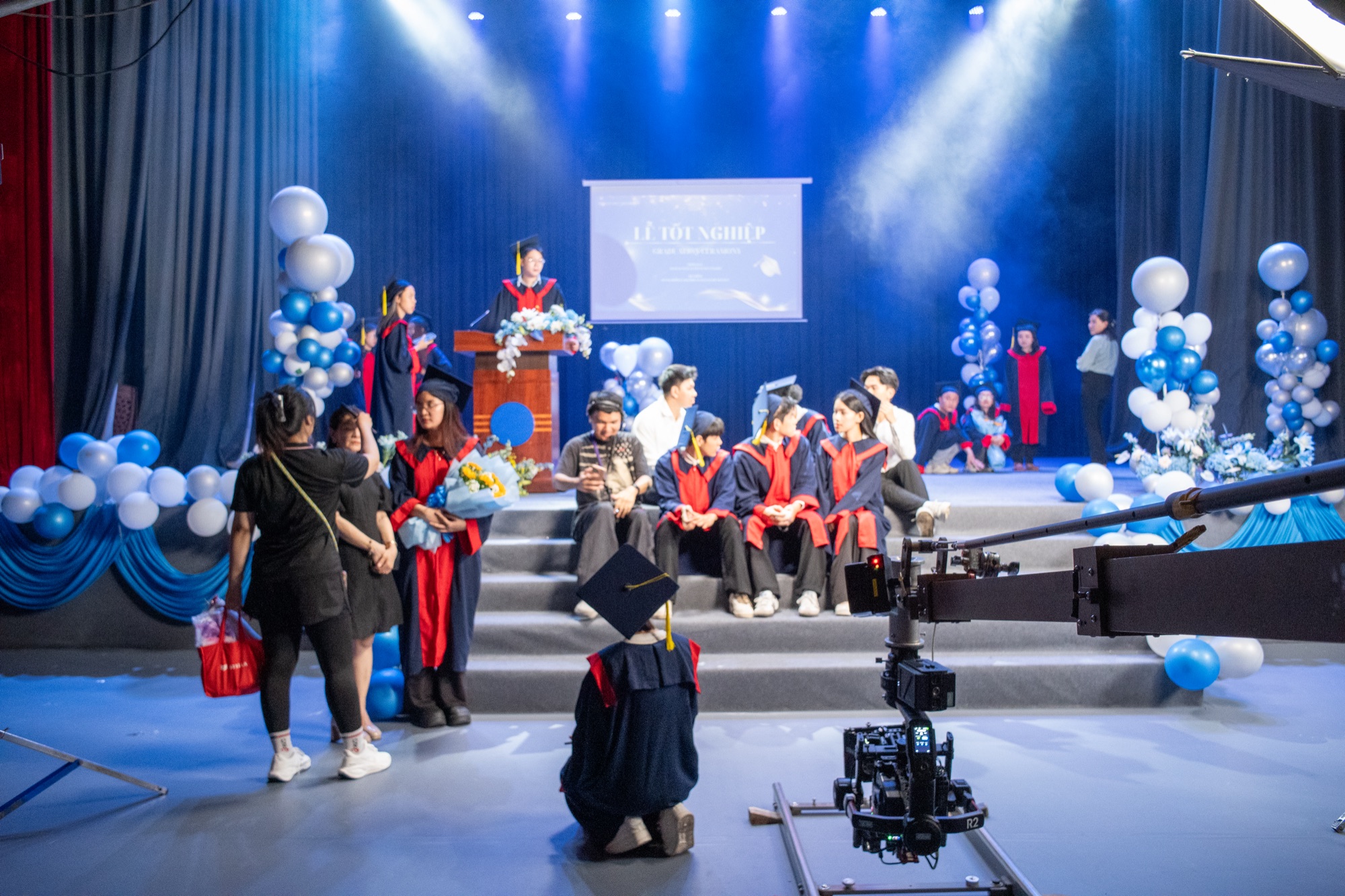
A crane and a gimbal on our Samsung Galaxy A56 shoot, set up for a camera that moves through the scene. A still of the same moment would want its own position and its own light.
"We will pull stills from the footage"
Sometimes that is fine. Know what you are getting.
A frame of 4K video is about eight megapixels. That is plenty for social and for most of the web. It is thin for print and for large outdoor formats.
It is also softer than a photograph, on purpose. Film is normally shot with a shutter of around one fiftieth of a second, so that movement blurs naturally from one frame to the next. Freeze one of those frames and the blur is still in it. A hand, a pour or a turning head will not be sharp.
Frame grabs suit behind-the-scenes and social posts. They are a poor way to get a key visual.
Five things to settle before the shoot
Decide the master, set-up by set-up. For each one, does the still lead or does the shot? Write it on the shot list.
Put the stills on the call sheet, with times. "Grab it between takes" is how stills get dropped when the day runs late, and the day runs late.
Take the product out. Pack shots and hero product stills belong in a studio session of their own, with their own light. Keep the shared day for people and places.
Clear the rights for both. Talent agreements price film, print and outdoor separately, by term and territory. Agreeing print use after the shoot costs more than agreeing it before.
Match the colour on purpose. One reference for the product's colour, used by both the retoucher and the colourist.
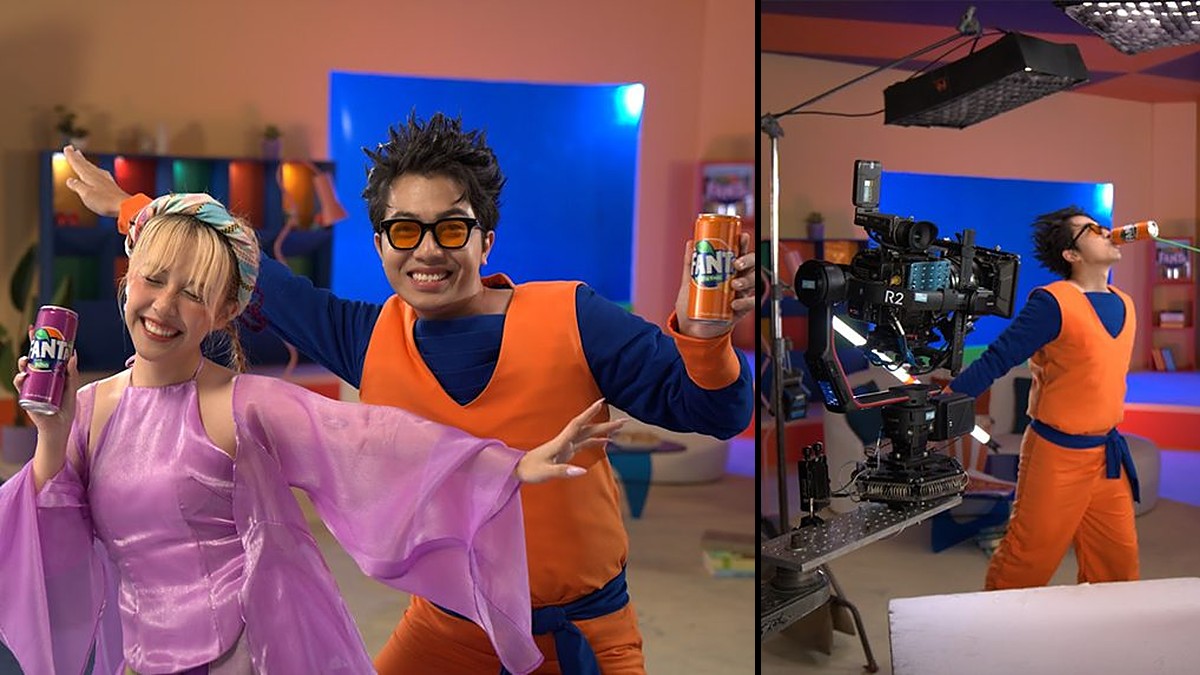
The last one is most of the job on a brand where the colour is the brand. We have shot Fanta in both forms, as a film and as a photoshoot, and the orange has to be the same orange on a phone and on a poster.
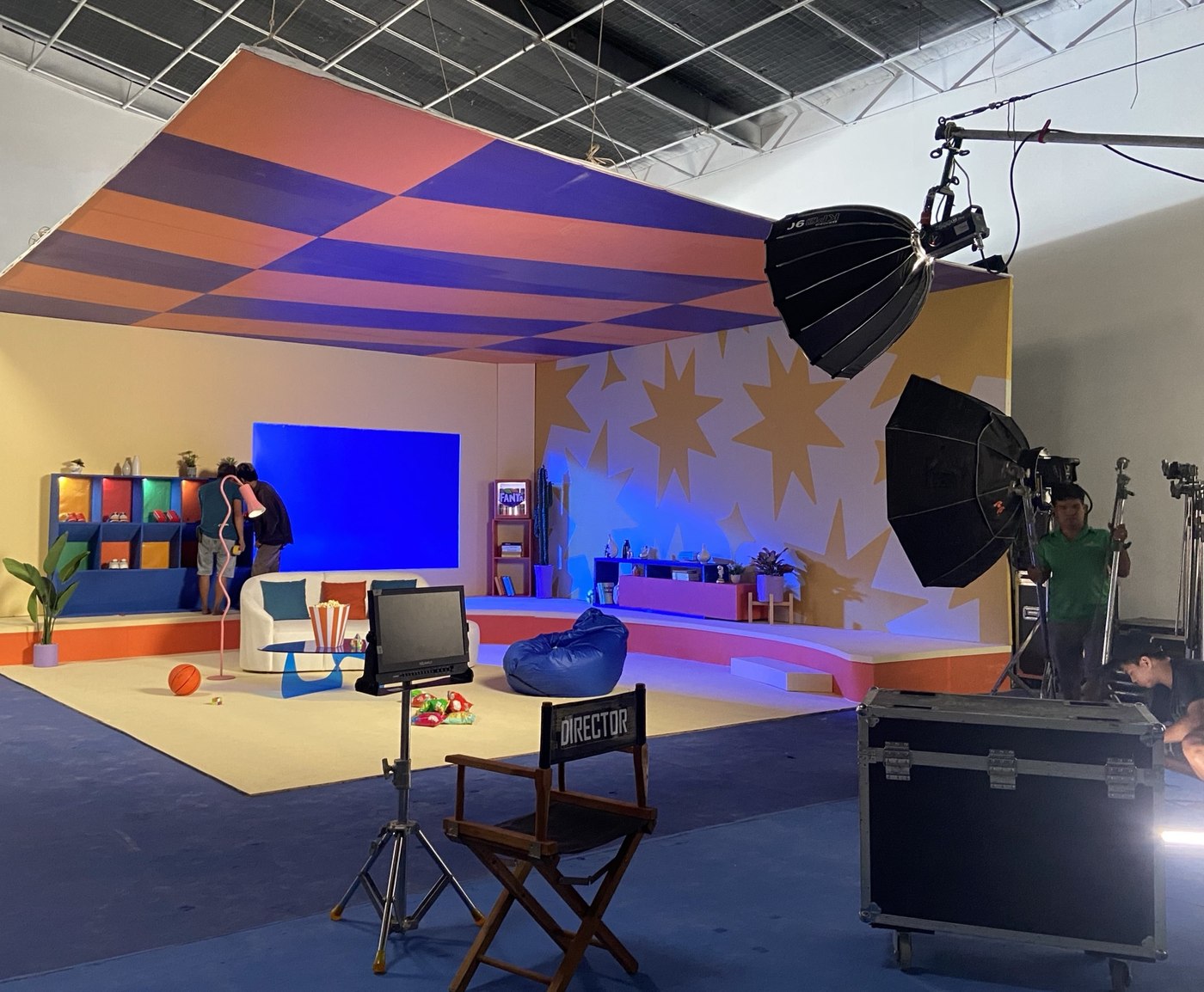
The set we built for the Fanta Colorful film. When the colour is the brand, it has to come out the same in the film and in every photograph taken on a set like this.
What it actually saves
One shoot saves the things that are truly shared: the location, the talent day, the art department, travel, catering. Those savings are real.
It does not halve anything. A stills unit is added: photographer, assistant, digital operator, then retouching. And every minute the photographer has the set is a minute the film crew is paid to wait. If that pushes the day into overtime, the saving is gone by dinner.
The honest sum is that a combined shoot costs more than a film shoot and less than two shoots. How much less depends on how much of the day is the same picture.
What to do differently
Look at the idea before the schedule. If the campaign is a set of moments, like the McDonald's work, shoot it once and plan the stills as shots. If the film depends on movement and the key visual depends on a built frame, book two sessions and stop treating them as one.
Either is fine. The expensive version is deciding on the day.
Dream Media develops, directs, shoots and finishes brand films in-house in Ho Chi Minh City.