
CGI vs live action vs AI: how to choose for a brand film
Choose how a brand film is made by what has to be true on screen. Live action is for real people and real things. CGI is for what a camera cannot photograph. Generative AI is for worlds that do not exist.
Most films now use more than one. The skill is in knowing where each belongs.
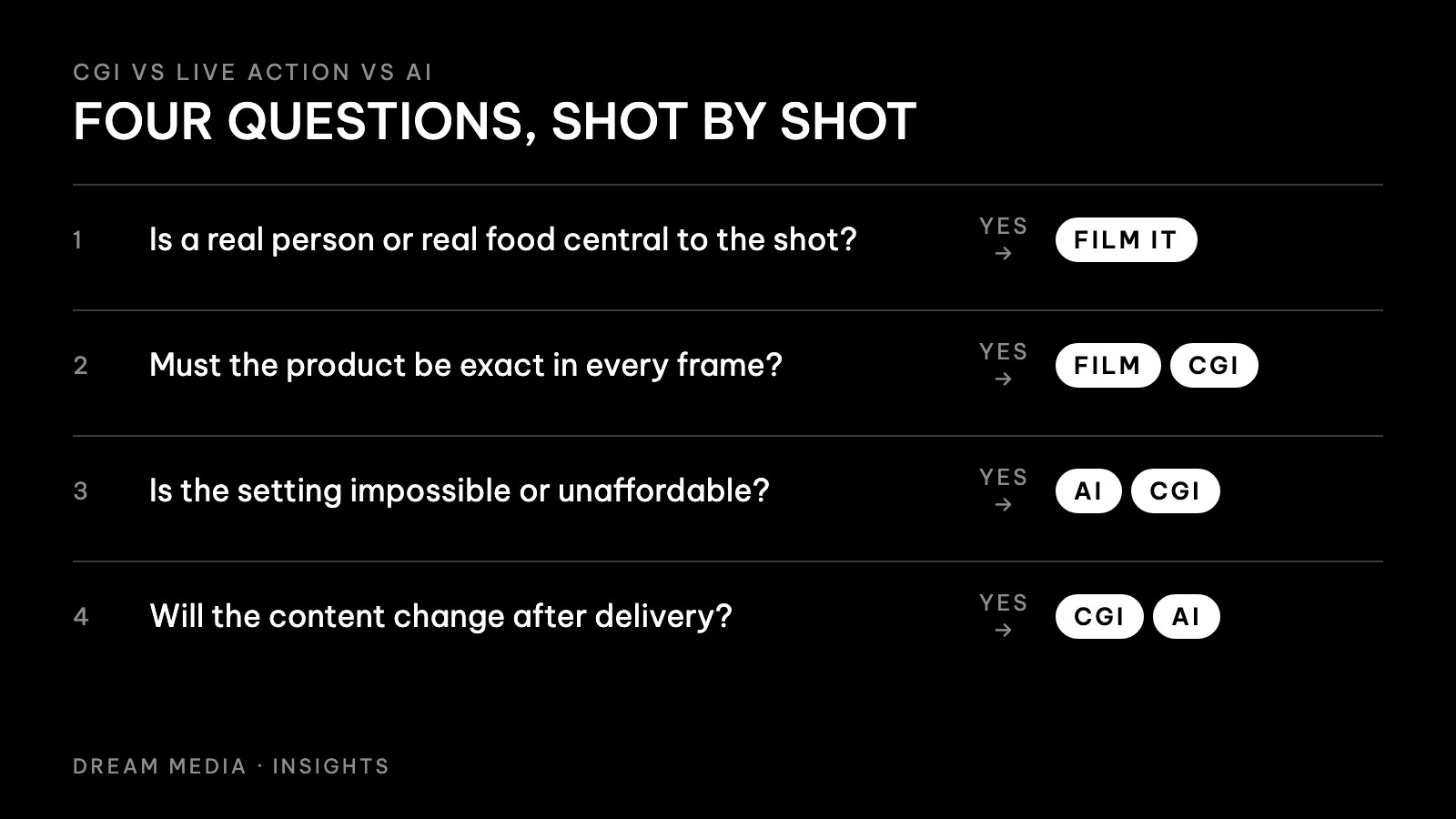
The four questions at the end of this piece, as one checklist.
Live action: when it has to be real
Faces, performance, skin, food, fabric, a product in someone's hand. Viewers are expert at all of these and notice when they are wrong.
Our Samsung Z Flip7 film is a date night told through food cinematography, lit plate by plate. It could not have been made another way and kept its appetite.
The cost of live action sits in the shoot day: crew, equipment, location, cast. Changes after the day are expensive, because the day is over.

Real food, lit for the camera, from our Samsung Z Flip7 film.
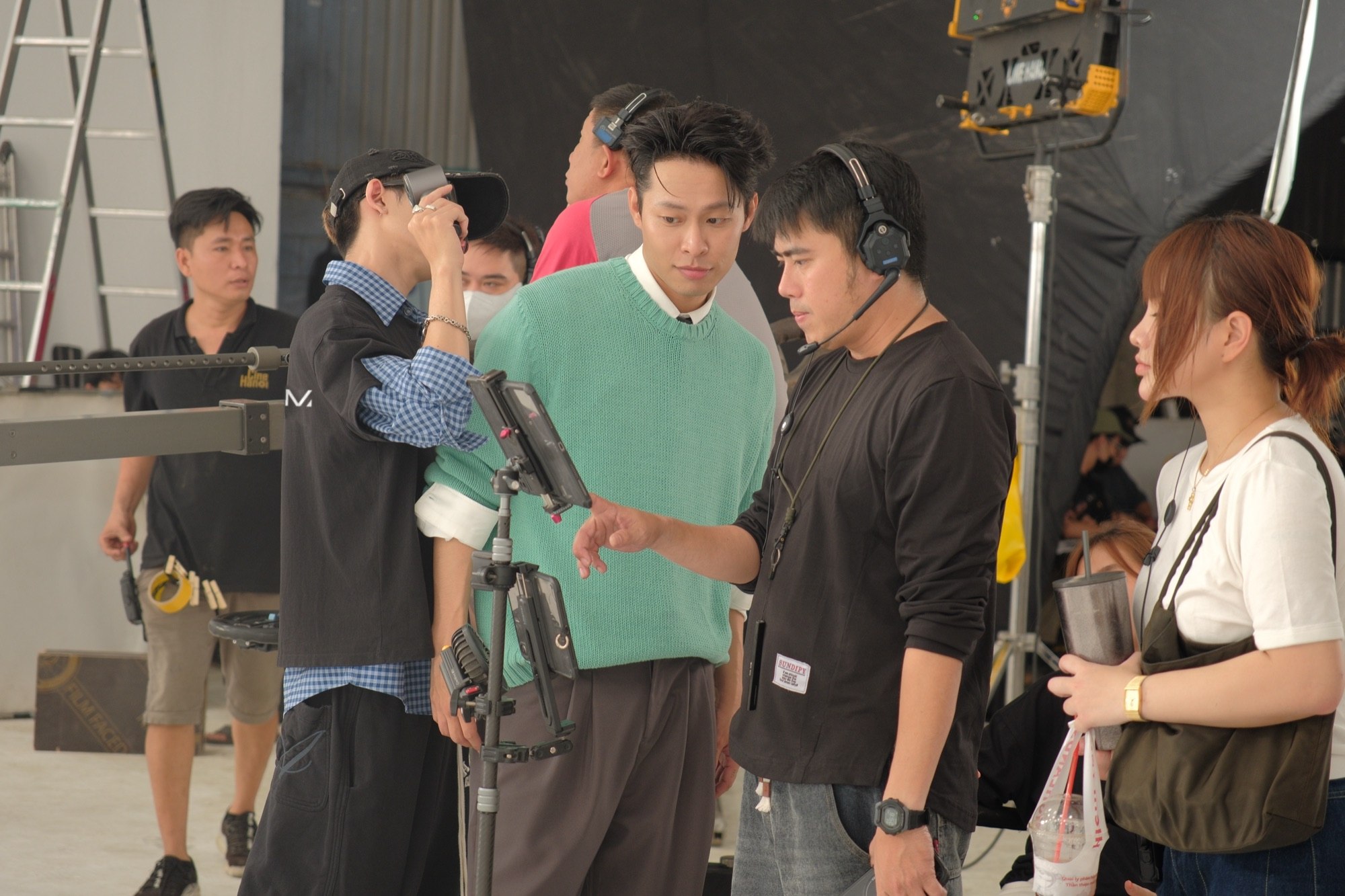
Going over a take with the talent on our CeraVe shoot. Skin and performance are what viewers judge in an instant, which is why skincare is still filmed with real people.
CGI: when the camera cannot get there
The inside of a product. A liquid behaving perfectly. A camera move through a space that is too small, or does not exist. A colour that has to match the brand exactly, every time.
Three examples from our catalogue.
The P/S S100 Pro bumpers are built entirely in CG. Six seconds leaves no room for a story, so the product does all the talking.
The Samsung Knox Vault films are animated because the subject is a chip doing invisible work. A camera has nothing to point at.
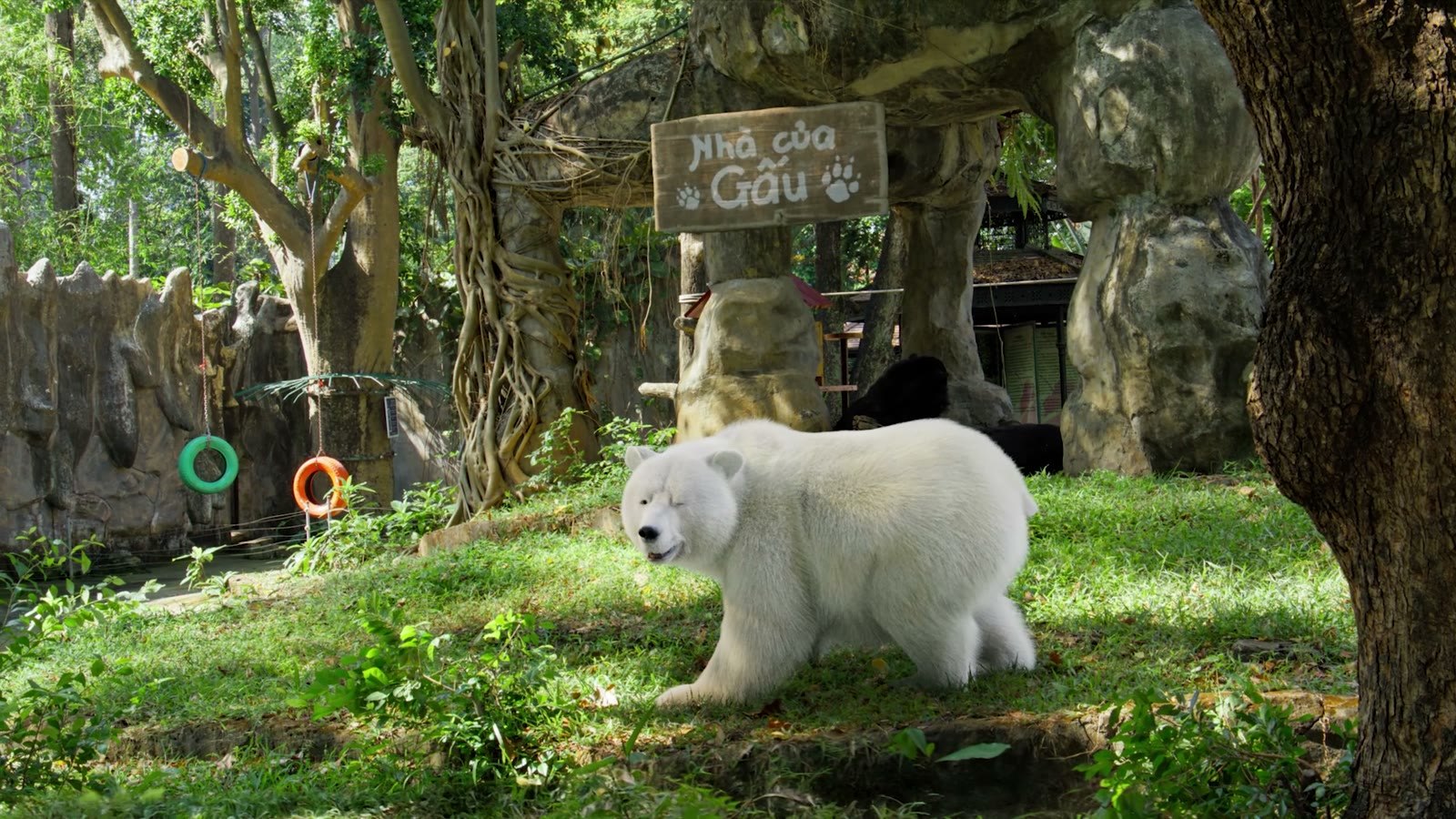
The Samsung Bespoke AI polar bear is a CG animal in a CG enclosure, because a real bear does not take direction.
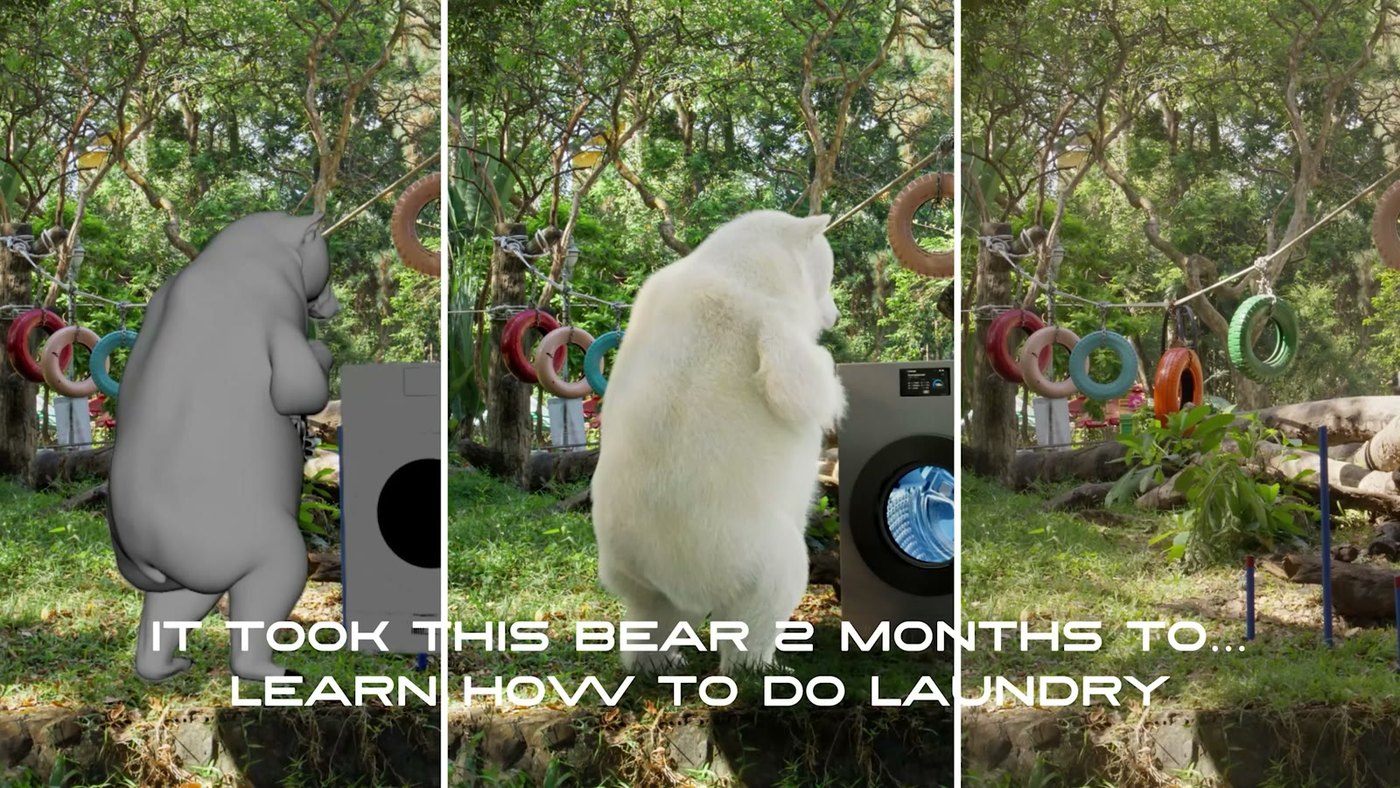
From grey model to finished fur, in the breakdown of our Samsung Bespoke AI polar bear. The team's own caption: it took this bear two months to learn how to do laundry.
CGI is slow and exact. It is often benchmarked per second of finished animation and quoted by complexity. It starts best from the product's CAD files; without them, the product is modelled from drawings and photographs, which takes longer. Its advantage is that nothing is final until it is rendered: the label, the colour and the camera can all change late.
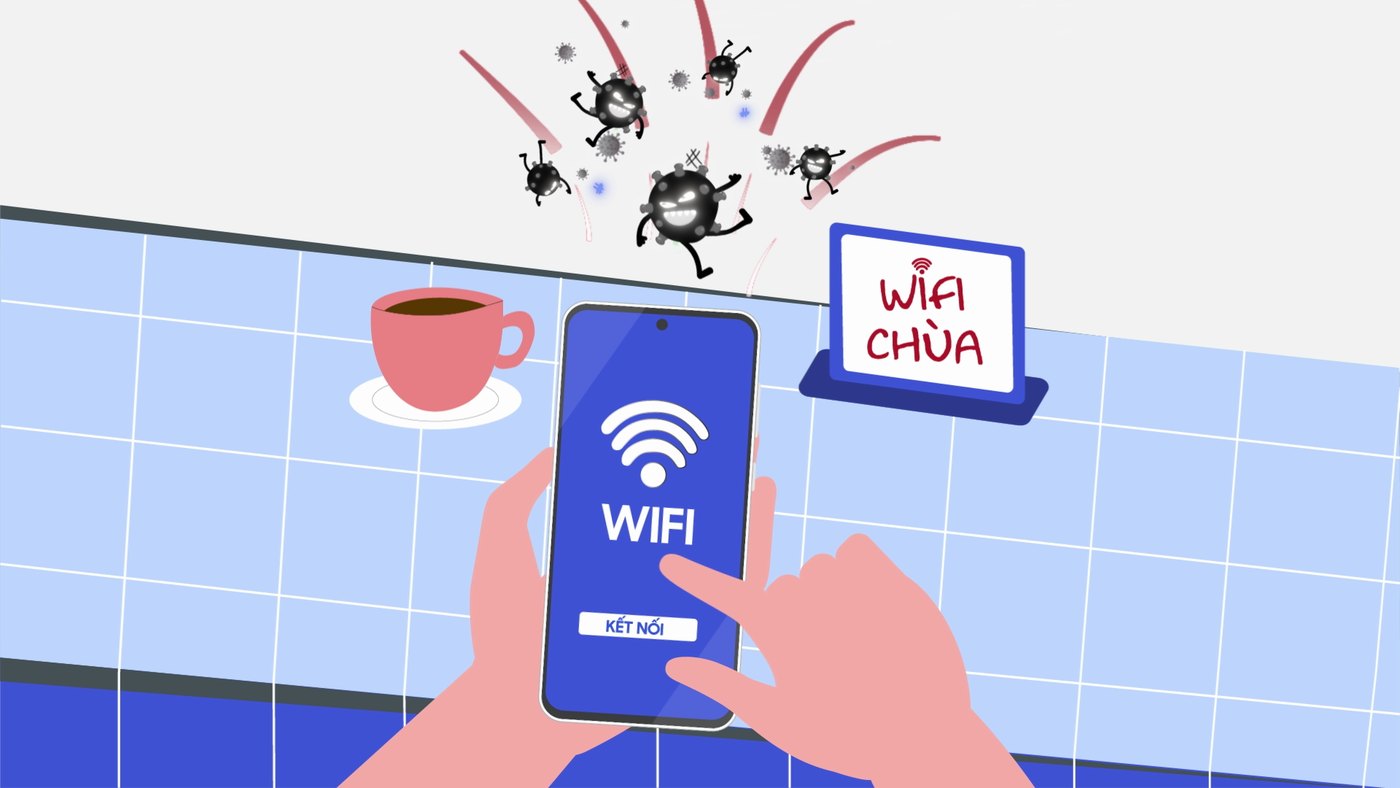
Security has nothing to film, so it is drawn. A frame from our Samsung Knox Vault animation.
Generative AI: when the world does not exist
AI is strongest where the picture is invented: scale, crowds, places nobody could build or reach.
We made four films for VPBank with generative AI. The North Star is set on a spacecraft. Hyper-Personalization ends on a bank branch staffed by robots, an image no location scout could have found. The four share one visual language.
Its weaknesses mirror the strengths of CGI. It is poor at exactness: a specific pack, a specific logo, the same face from one shot to the next. When Coca-Cola's 2025 Christmas film was made with AI, The Drum counted only two of its eleven truck scenes showing the same truck. Holding continuity across a whole film is skilled work, and the output still goes through editing, compositing, clean-up and grading like any other footage.
It also sits inside a normal production. There is still a script, a board, a director and an edit.
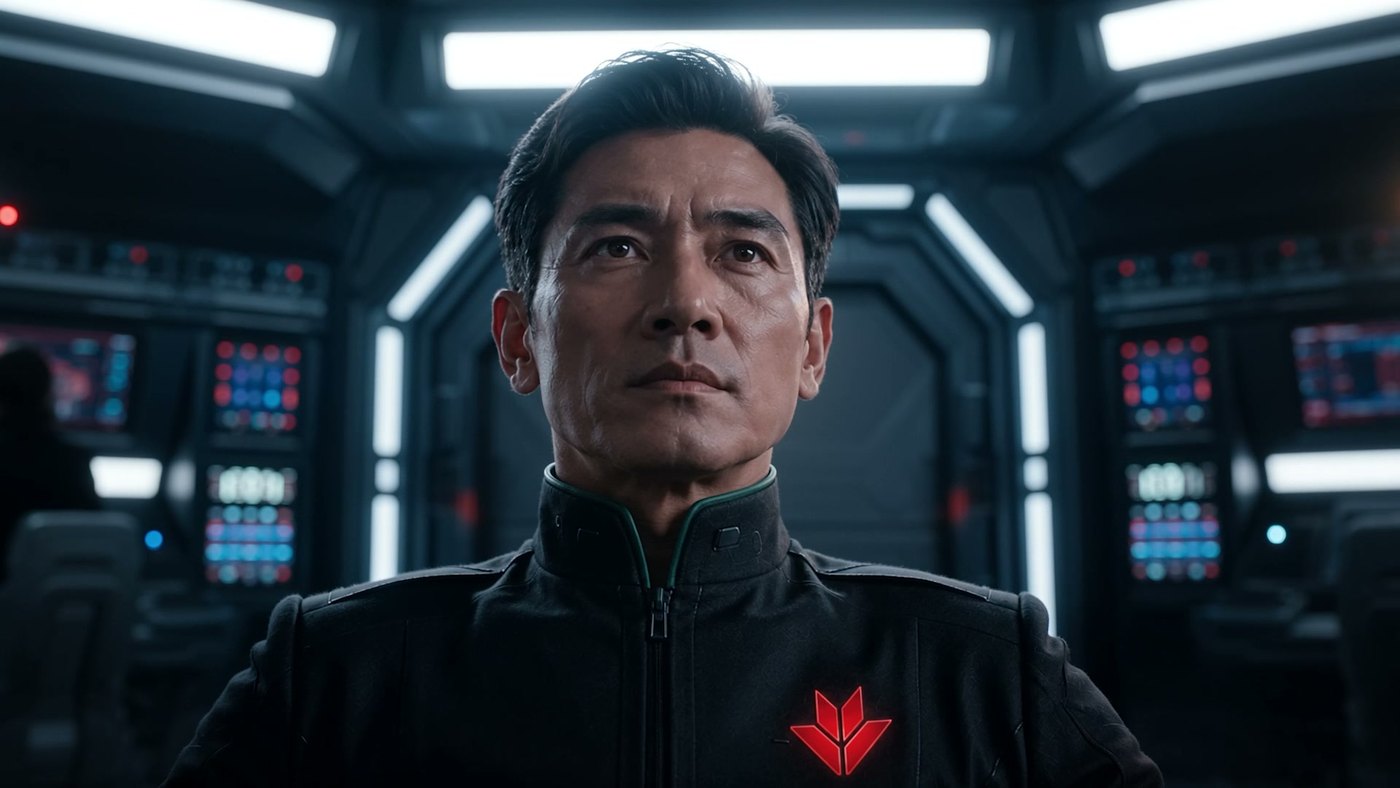
A set that exists nowhere: The North Star, one of four films made with generative AI for VPBank.
The usual answer is a mix
Real cast, CG product shot. The people are filmed. The pack shot is rendered, so it is perfect and can be updated.
Real foreground, generated background. A set extension in place of a location.
CG product, real hands. The interaction is filmed and the object replaced.
An LED wall on set. The background plays on a screen behind the cast and is filmed in camera, so everyone can see it.
AI for the boards, live action for the film. Concept images quickly, then a normal shoot.
The decision is made shot by shot, not film by film.
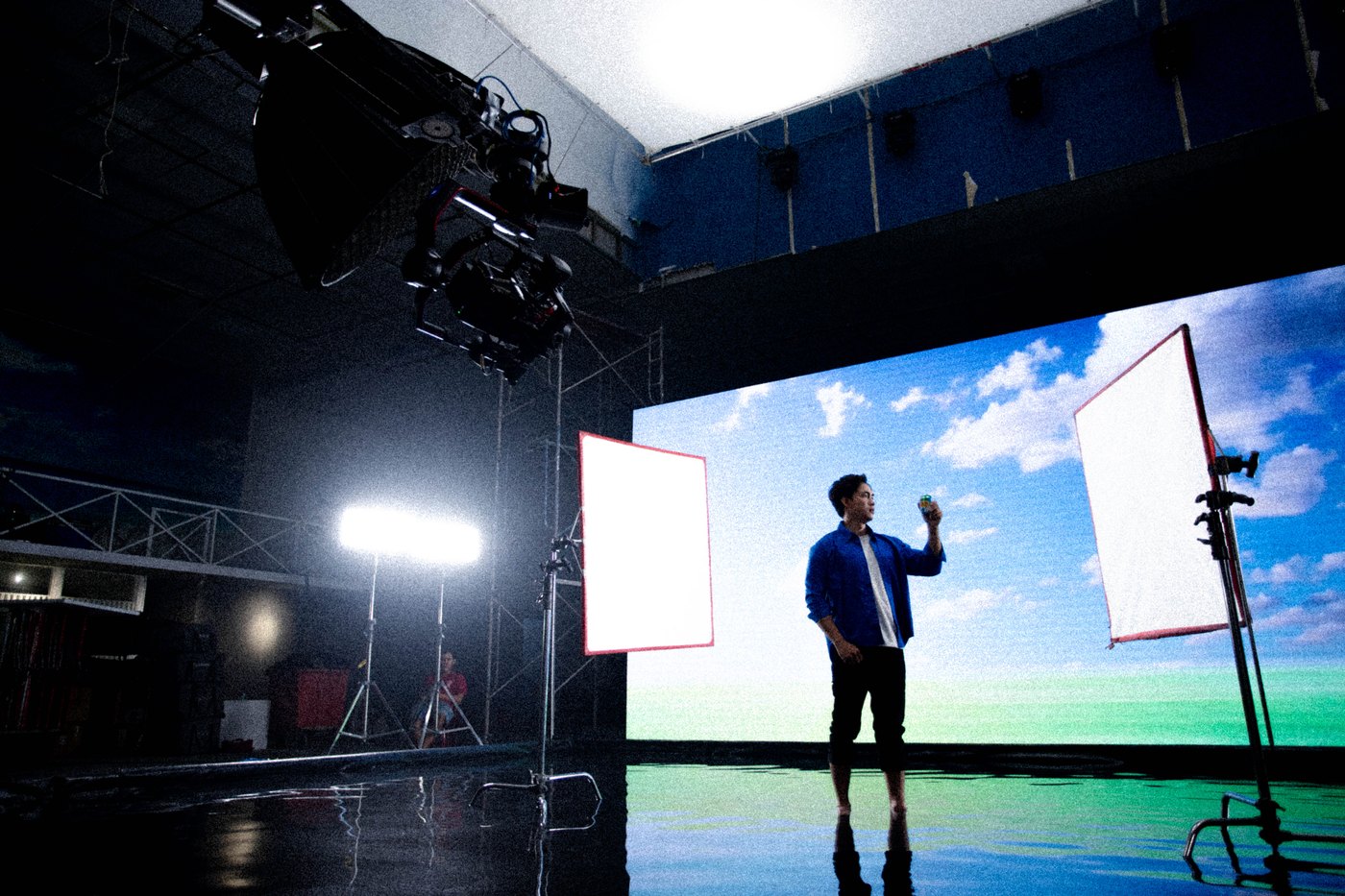
An LED wall on our Lipovitan shoot. The background plays live behind the cast, so it is in camera and in their eyeline.
How to choose, in four questions
Is a real person or real food central to the shot? Film it.
Does the product have to be exact in every frame? Film it, or build it in CG. Do not generate it.
Is the setting impossible or unaffordable? Generate it, or build it in CG.
Will the content change after delivery? CG and AI can be revised. A shoot cannot.

The first rough drafts of the polar bear film: a sketch, a reference and a 3D layout, before any rendering.
What each costs, in shape
Live action is paid for in days. CGI is paid for in weeks of artists' time. AI is paid for in iteration and finishing, and in the people who can direct it.
None is cheap by nature. AI is not a way to make the film you were already going to make for less. It is a way to make a film you could not otherwise have made.
Where each of these appears on a quote is covered in how to read a production quote.
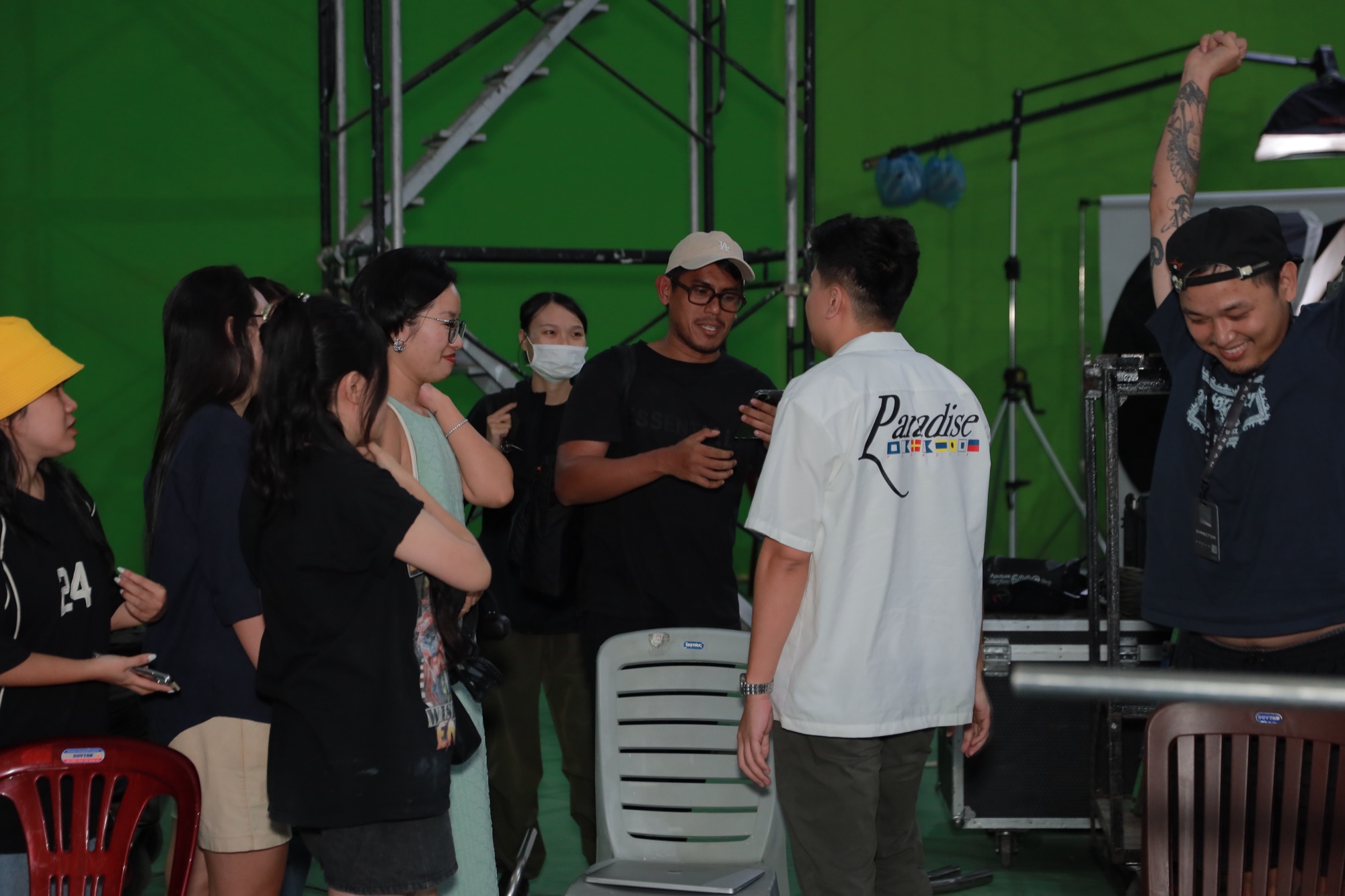
The end of a green-screen day on our Samsung Galaxy A16 shoot. Green screen is the mix in one room: the cast is filmed for real and the world behind them is built afterwards.
Quick answers
Is CGI cheaper than live action?
Sometimes. A single product on a simple background can be cheaper to film than to render. A scene that would need a set build, travel or a second shoot day is often cheaper in CG.
Can AI generate my real product accurately?
Not reliably. Shapes, labels and logos drift between shots. The product is normally filmed or rendered, then combined with generated material.
Can CGI, AI and live action be used in the same film?
Yes, and most films do. The join is made in compositing and in the grade, which is why it helps to have one team finishing the whole film.
Dream Media develops, directs, shoots and finishes brand films in-house in Ho Chi Minh City. See our AI work.