
Video deliverables: cutdowns and aspect ratios to plan
Decide the list of video deliverables before the shoot. A version that was planned is framed for on the day and costs little. The same version discovered in the edit costs a re-frame, new graphics and sometimes a reshoot.
The video deliverables most campaigns need
The master. Usually 16:9, at the full length.
Cutdowns. Shorter versions of the master: thirty seconds from sixty, fifteen from thirty.
Bumpers. Six seconds.
Aspect ratios. 9:16 vertical, 4:5 for feeds, and sometimes 1:1.
Subtitled versions. A lot of feed video is watched on mute, especially in public: 69% of US adults in a 2019 survey watched with the sound off in public places. TikTok and Reels are largely watched with sound. Make the film work both ways.
Clean versions. No on-screen text, for other markets or later re-use.
Stills. A thumbnail for each film, and key visuals if the campaign needs them.
Multiply lengths by ratios and "a thirty-second film" is often a dozen files. Each is a master that has to be conformed, checked and delivered.
What a deliverables list looks like
For a modest campaign with one hero film:
1 × 30-second master, 16:9
1 × 15-second cutdown
2 × 6-second bumpers
all four in 9:16 and 1:1 as well
subtitled versions of the 30 and the 15
a clean 30 with no on-screen text
3 stills for thumbnails
That is four films, three shapes each, plus two subtitled versions and one clean one: fifteen video files and three images from "one thirty-second film". Written down like this, it can be quoted, framed for and scheduled.
A six-second bumper is its own idea
YouTube's bumper ads cannot be skipped and run for up to six seconds, according to Google's guide to video ad formats. Six seconds is not a short thirty. It has room for one thing.
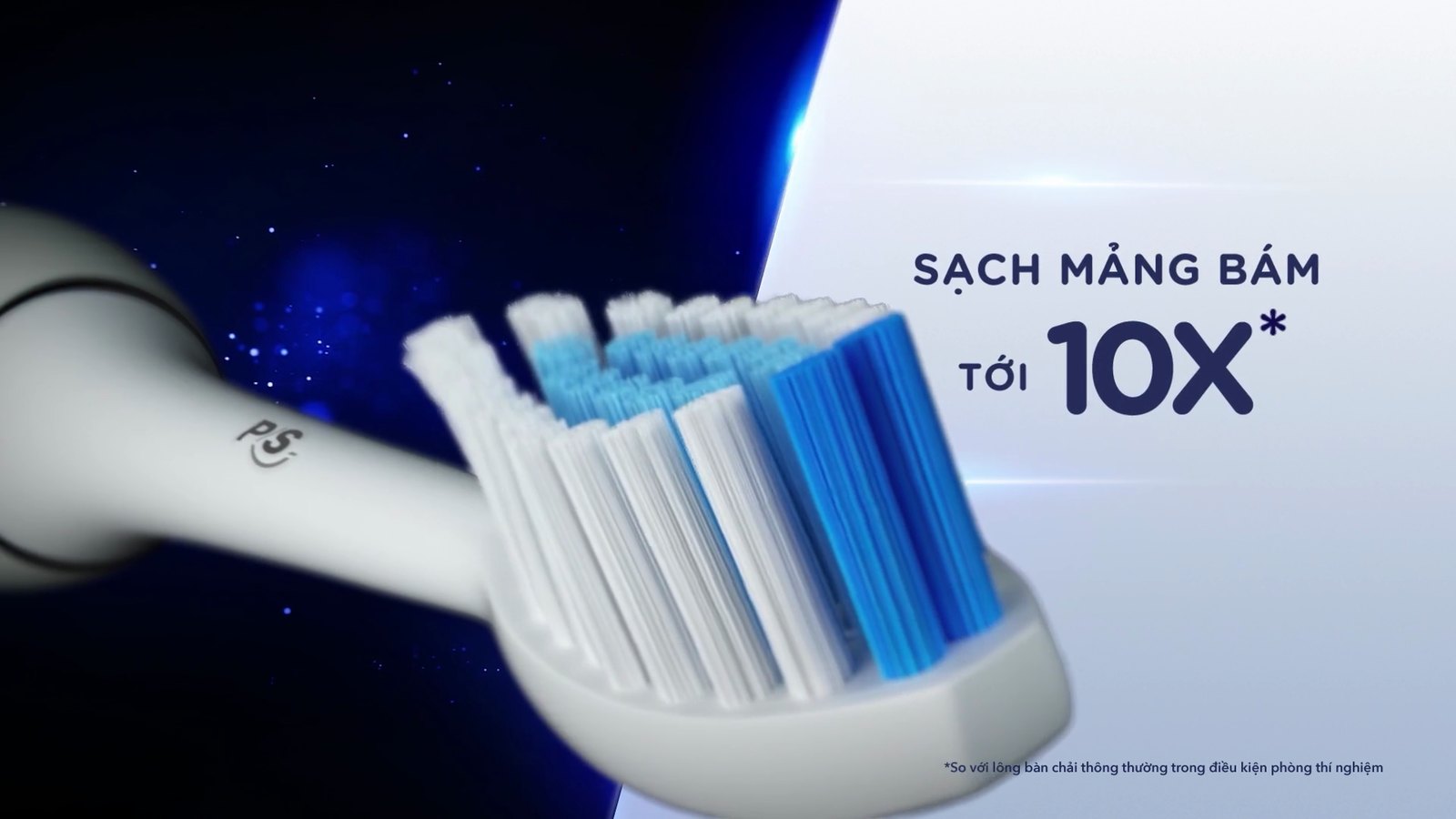
Our bumpers for the P/S S100 Pro toothbrush carry one claim each: plaque removal in one, brushing modes in another, the timer in a third. They are built entirely in CG, with no story, and the product does all the talking.
The Dove hair bumpers take the opposite route: one real woman and her hair in each film.
Either way the bumper was written as a bumper. Trimming one out of a longer film afterwards rarely works, because a story cut to six seconds is only the end of a story.
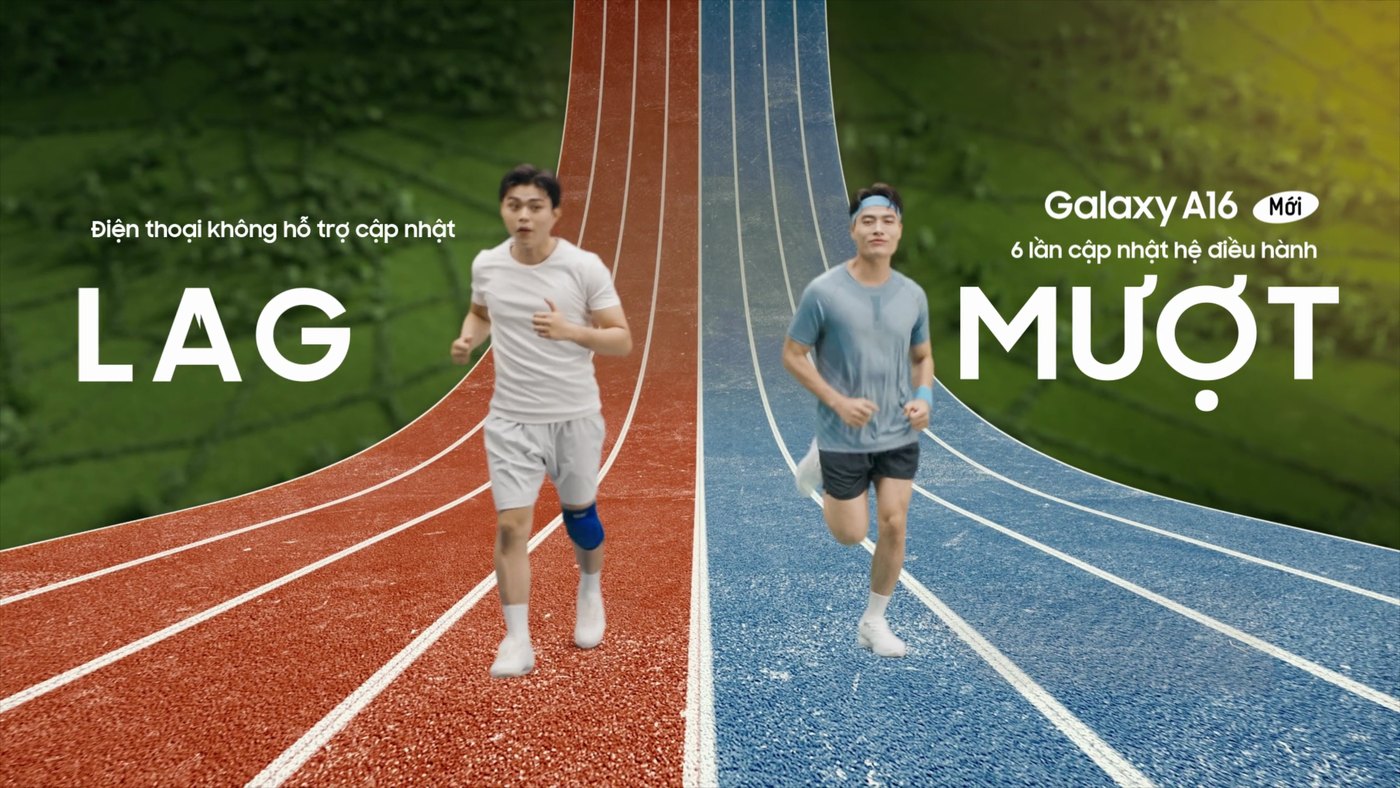
A frame from the sixty-second Samsung Galaxy A16 film, which sits alongside a separate spot for each feature.
Feature films: one campaign, several masters
A product with several things to say often needs a film for each.
For the Samsung Galaxy A16, our catalogue holds separate spots for 5G, the display, splash resistance and Knox security, plus the sixty-second film that brings them together.
That is five masters before any cutdown or vertical version. The structure has to be in the brief, because it decides the shot list.

A frame from the Dove Nourishing Secrets series: three films from one product line, each cut for a different shopper.
Vertical video has to be framed on set
A 9:16 version cut from the middle of a 16:9 frame keeps about a third of the picture's width. If the product was on the left and the face on the right, one of them is gone.
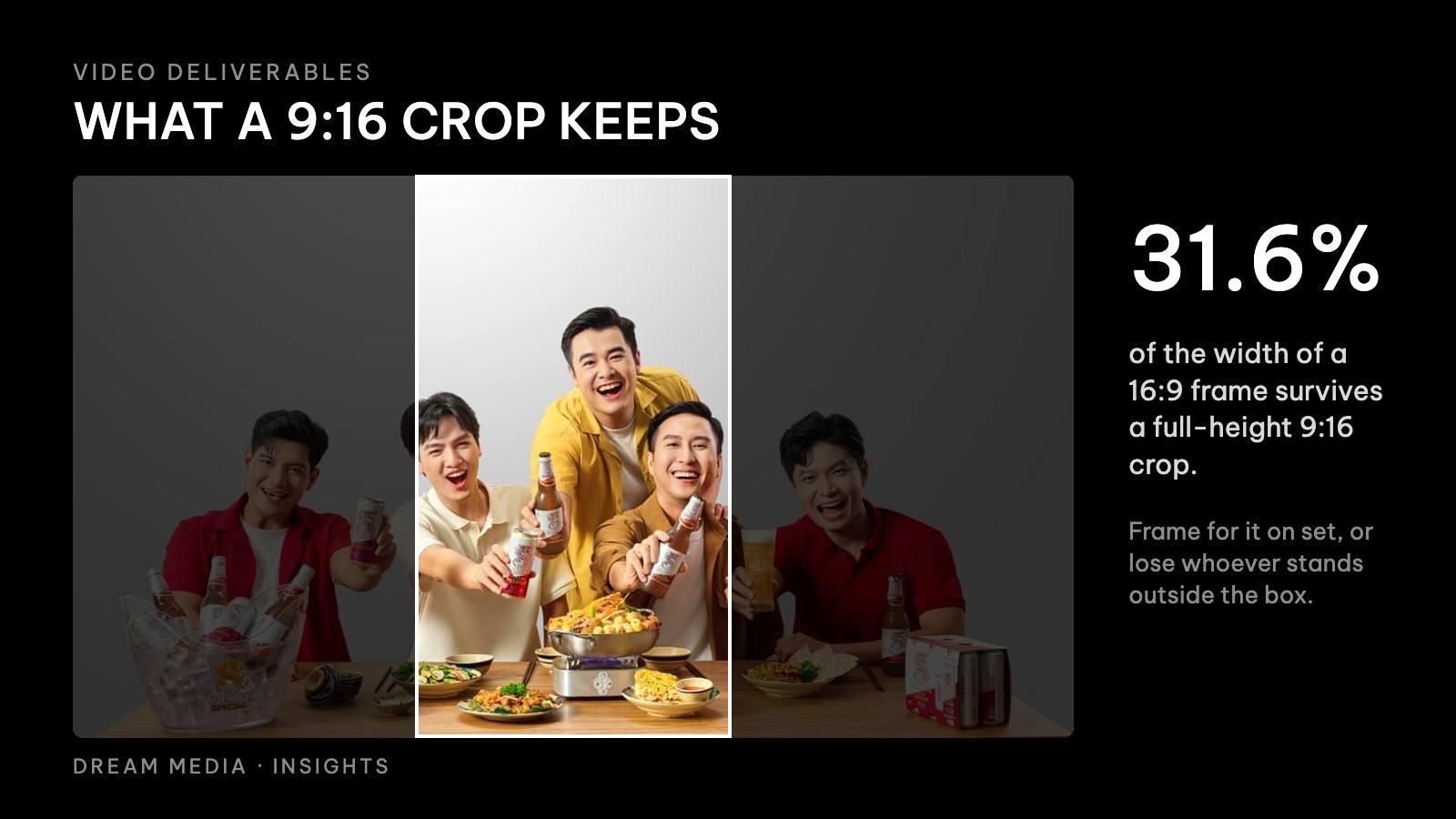
A full-height 9:16 crop of a 16:9 frame from our Bia Saigon Export Premium photoshoot. Most of the table is lost.
There are three ways to deal with it, in order of cost.
Protect for vertical. Compose the wide frame so the subject sits inside a central 9:16 area. Monitors on set can show both frame lines at once.
Shoot taller. Record more height than the 16:9 master needs, so the vertical version has real picture above and below.
Shoot it twice. A separate vertical set-up for the shots that matter most.
On-screen text is redone for each ratio, and kept clear of the areas where each platform puts its own buttons and captions.
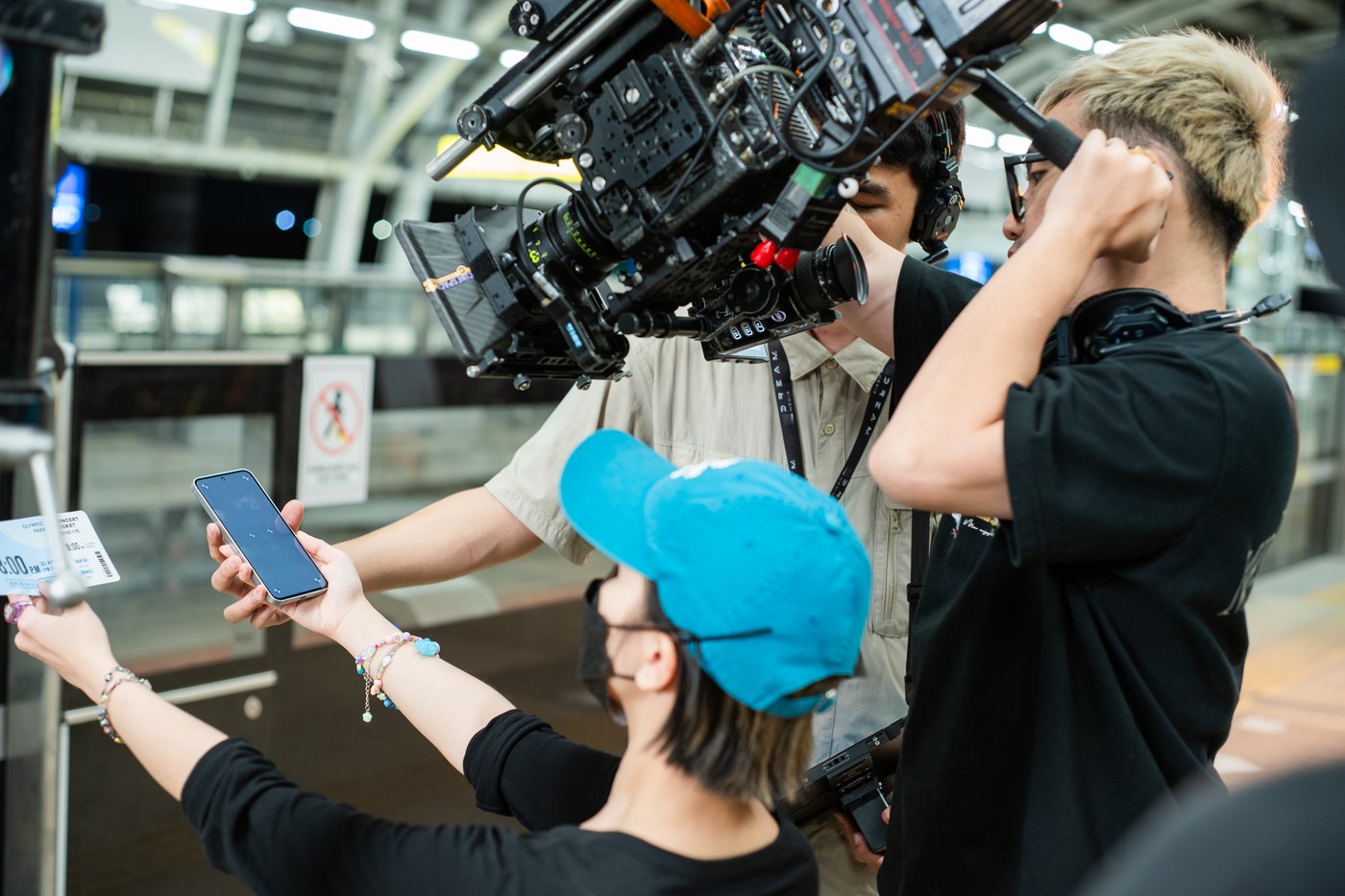
Framing is decided at the camera, here on our Samsung Galaxy S24 shoot. A vertical version has to be thought of before this moment.
What each version costs
On a quote, adapted versions are their own line, priced per version.
A planned vertical or square version is a conform, new graphics and a check. An unplanned one adds re-framing, shot by shot.
Cutdowns need an editor's time and usually a new sound mix, because a new length means new timing for music and voice.
Language versions add voice recording and new on-screen text.
The saving comes from fixing the list early. Where these lines sit is in how to read a production quote, and the list itself belongs in the production brief.
Ask the media agency before the shoot
File specifications differ by platform and change often. Ratios, maximum lengths, file sizes and safe areas should come from whoever is booking the media, in writing, before the shoot. Not from memory, and not from last year's campaign.
Quick answers
What is the difference between a cutdown and an adaptation?
A cutdown changes the length. An adaptation changes the shape or the language: a new aspect ratio, new text, a different market.
Which aspect ratios do I need for social video?
For most campaigns: 9:16 for Reels, Stories, TikTok and Shorts; 4:5 (or 1:1) for feeds; 16:9 for YouTube and television. TikTok's own ad specifications recommend 9:16 and accept 1:1 and 16:9. Confirm against the media plan.
Can vertical versions be made after the shoot?
Yes, by cropping. It works when the frame was composed for it and fails when it was not.
Dream Media develops, directs, shoots and finishes brand films in-house in Ho Chi Minh City. See TVC and digital production.