
Shooting in the rain: how rain scenes are made for film
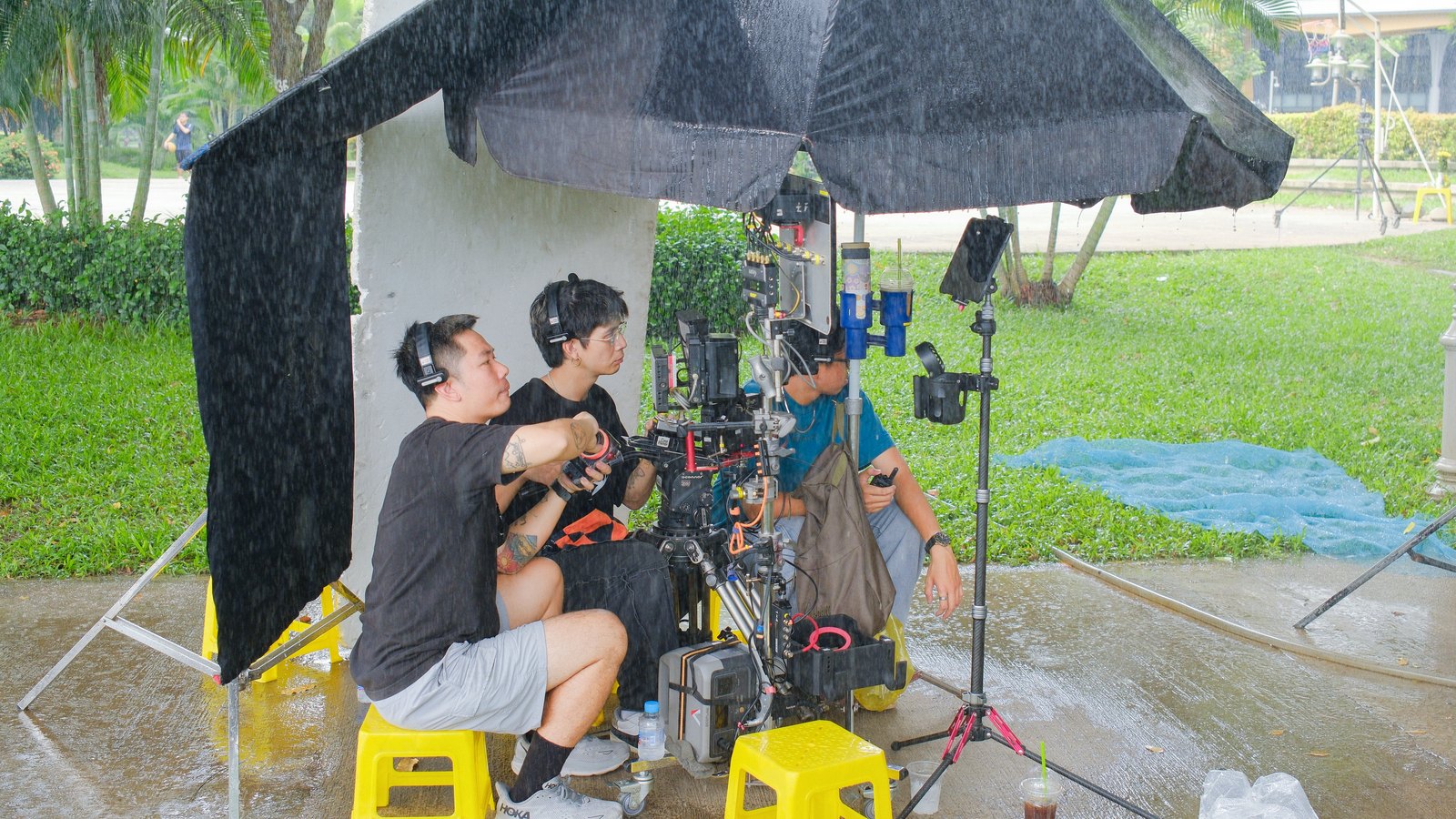
Rain on screen is almost never the weather. It is water pumped through pipes above the frame, lit from behind, and switched off between takes. Real rain is too fine to show on camera, it stops when it likes, and it cannot be matched from one shot to the next.
We have built rain in daylight, over a park path for a Samsung Galaxy A film about a phone that survives a downpour, and at night in a courtyard, for the opening of the short film Thương Phổi. This is what it takes.
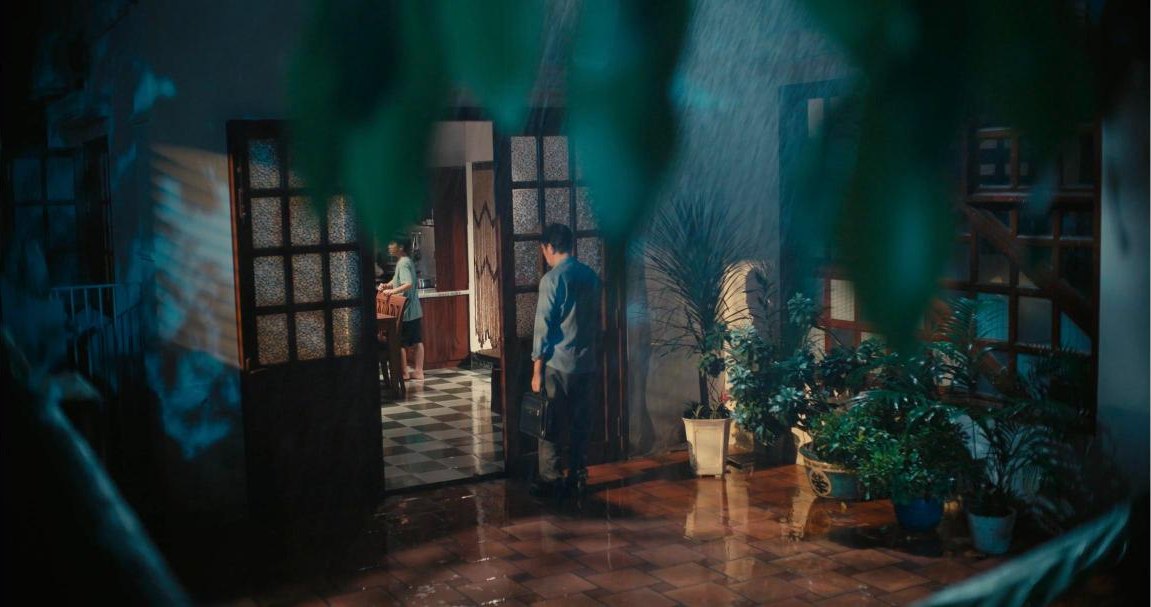
The opening of Thương Phổi, a short film for AstraZeneca with TBWA. The rain reads because it is lit from behind against a dark wall, and the wet floor carries the light.
Why real rain rarely works on camera
It is too fine. Rain that a camera can see is heavier than most real rain. Cinematographers who have done it say that it takes a lot more water than you would expect.
It does not wait. Start a sequence in real rain and it will probably stop before you finish, which is why rain is rigged even on a rainy day.
It cannot be matched. Every shot in a scene has to show the same rain, in the foreground and the background.
Rain has to be lit, not just poured
The old rule is that you have to backlight rain, or you will not see it. A drop lit from behind catches the light and glows. Lit from the front, the same rain disappears.
Three things decide whether it reads:
A light behind the rain. To one side, out of frame, and kept off the actors' faces.
A dark background. Rain against trees, a wall or night sky shows. Against a bright sky it washes out. This is why rain is easier at night and hardest at noon.
Enough water. A fine mist reads as haze. Heads that throw bigger drops read as rain.
Over-lit rain looks fake, so the level is usually set by eye on the monitor once the water is running.
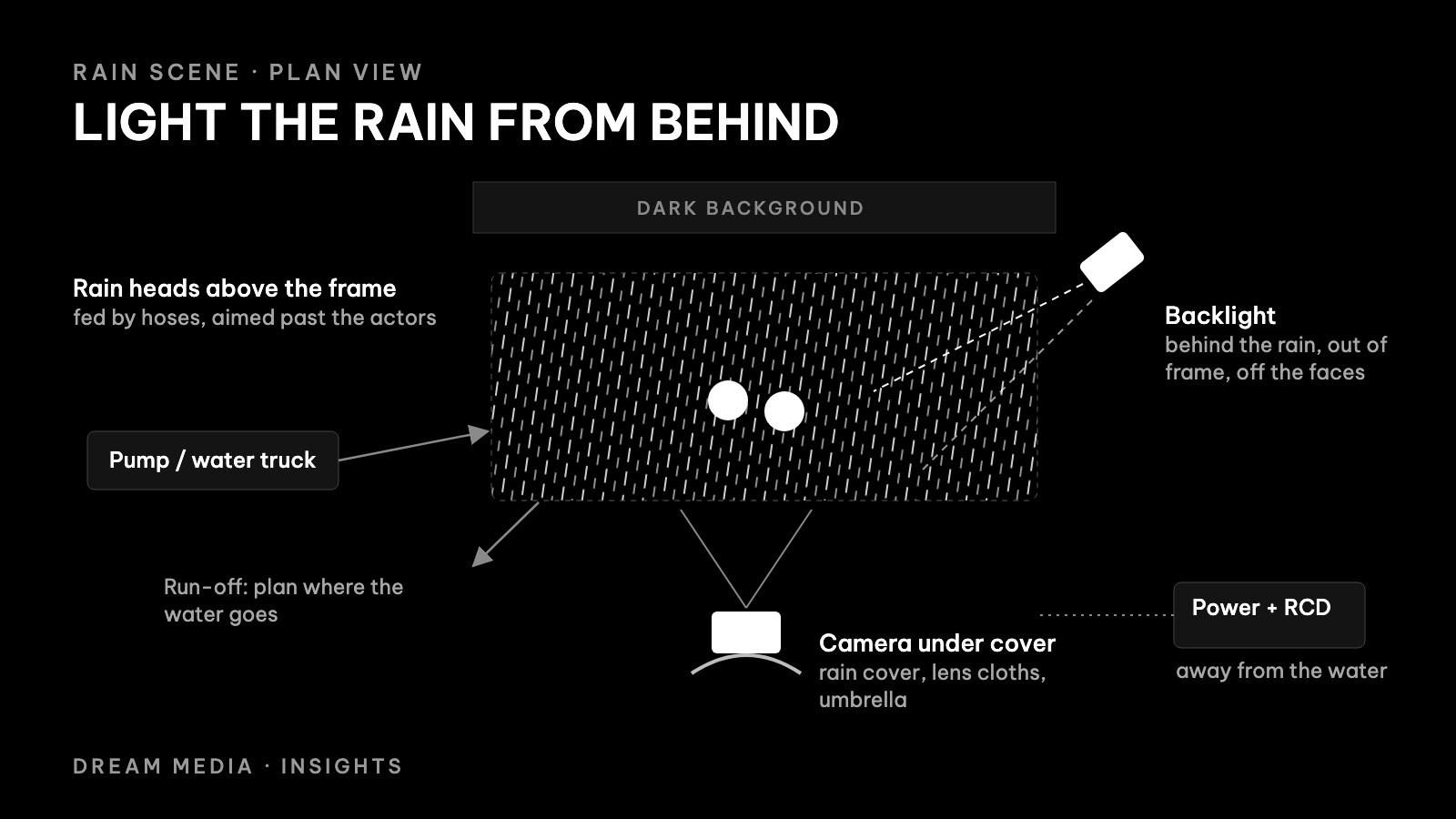
A rain set from above. The backlight sits behind the rain, the camera stays dry, and the power is kept well away from the water.
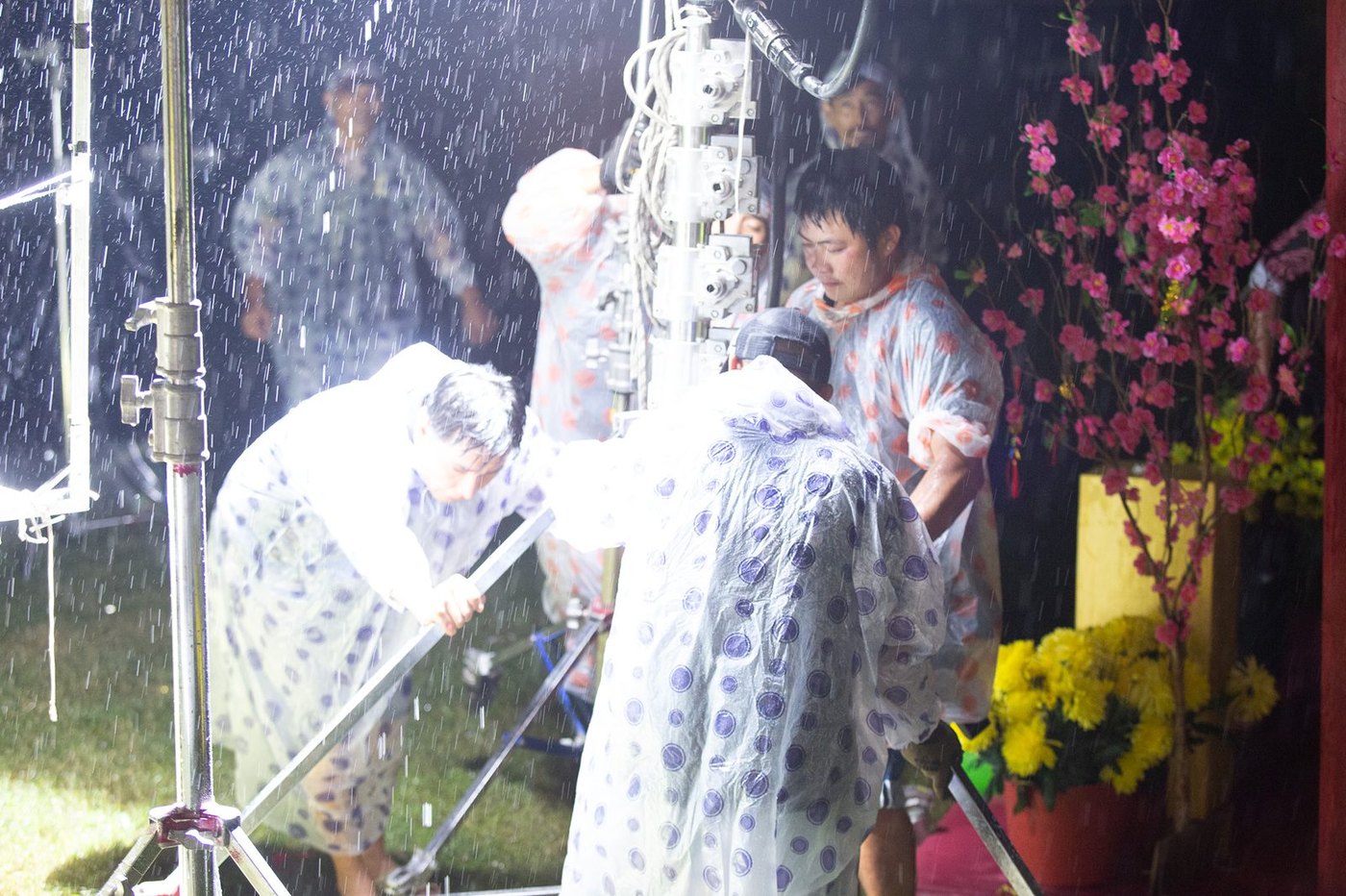
Backlit rain at night on our Fanta Tết shoot. Every drop catches the light behind it, which is why the rain shows against the dark.
How the rain is made
Rain heads and rain bars. Sprinkler heads on stands, or a pipe of heads across the frame. Small rigs go on stands and ladders. A wide shot needs a crane or a lift to hold the rain above the frame. One large head often looks more natural than several small ones whose rain crosses.
Water supply. Mains water, a water truck or a tank with pumps. The flow decides how much frame can be in the rain, so the water plan comes before the shot list is final.
Wet-down. Watering the ground, walls and leaves so the place looks rained on. It costs a fraction of full rain and often does half the job. On a hot day it dries fast and has to be redone between takes.
Run-off. The water has to go somewhere. The location owner will ask, and so should you.
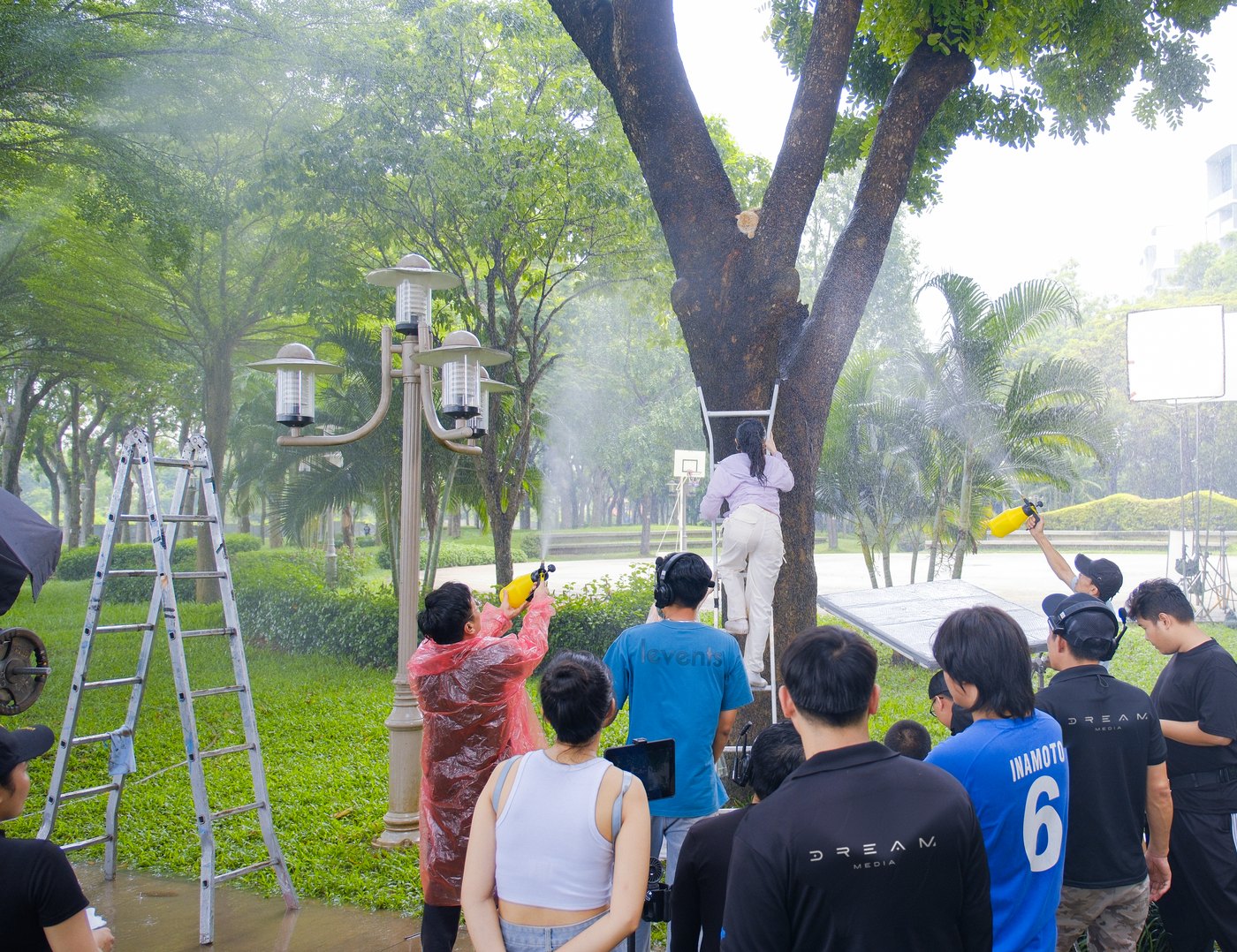
Making rain over a park path for our Samsung Galaxy A film: rain pipes held on ladders, hoses back to the pump, and the crew in ponchos.
Rain on people
The water is cheap. The cost of a rain scene is time. Every take soaks the cast, and every reset means drying hair and wardrobe or changing into a second set.
Wardrobe in multiples. Two or three of each costume for wet scenes, so one dries while another is on camera.
Hair and make-up between takes. Wet hair is continuity. Once an actor has been soaked, every shot that follows has to match.
Keep the cast warm. Hose water is cold, and actors need somewhere to get warm and dry between takes. A US industry safety bulletin on water work says that for people who stay wet, getting too cold is a likelier hazard than overheating, and lists towels, warm areas and breaks (CSATF Safety Bulletin #17).
Footing. Wet grass, tiles, ladders and cable runs. Somebody's job is to watch for them.
With extras the list multiplies: more wardrobe, more space to dry, more people to keep warm, a medic on set. A drone over people needs its own permit and its own safety plan; we covered the permit in filming permits in Vietnam.
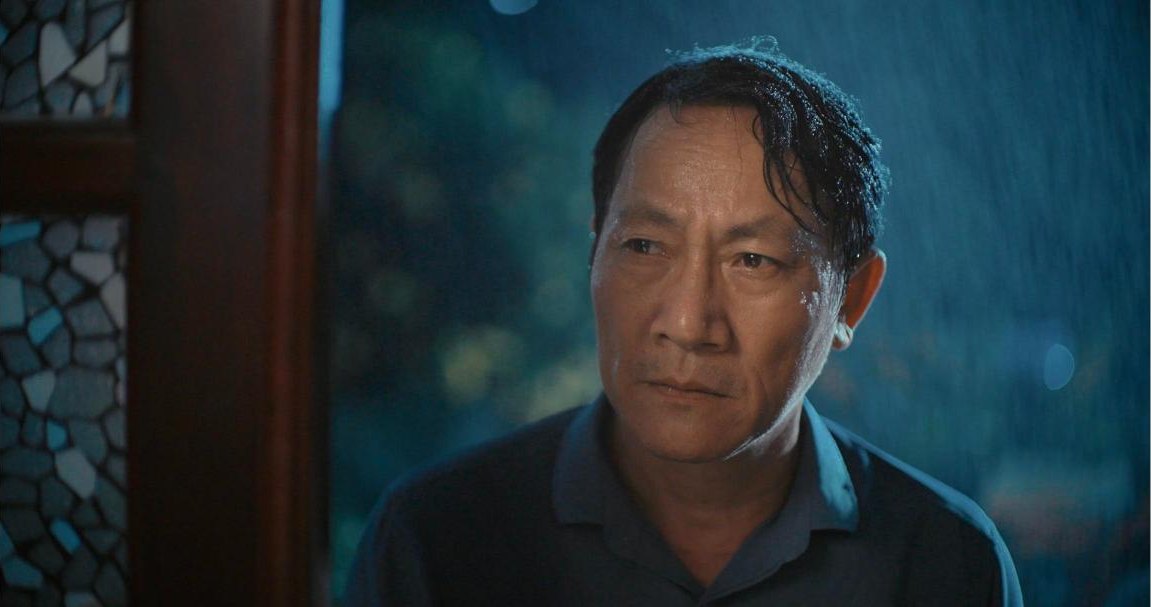
Wet hair and backlit rain in Thương Phổi. The close-up has to match the wide shot before it, drop for drop.
Water and power
The serious risk on a rain set is electricity. The same bulletin says:
Electrical connections should be made by, or under, a qualified person.
Whether ground-fault protection (an RCD, or GFCI) is needed near water is that person's decision, and it should be decided again whenever people, wardrobe, props or equipment get wet.
Ground-fault breakers do not work on DC and usually not on dimmer circuits. Low-voltage, battery-powered LED lights are worth considering near water.
In practice: power distribution away from the water, cables off the ground, stands sandbagged so they cannot tip, lamp heads under rain covers.
Camera, product and sound
Camera. A rain cover, umbrellas over the camera and the monitors, and a lens cloth or air blower to clear drops from the front of the lens.
Product. A wet product is a styling job. Drops on a cold bottle or glass are usually made with a mix of glycerine and water, sprayed or placed by hand, because plain water runs off and dries under the lights (Style Department). When the product itself has to be in the rain, the shot is planned around it.
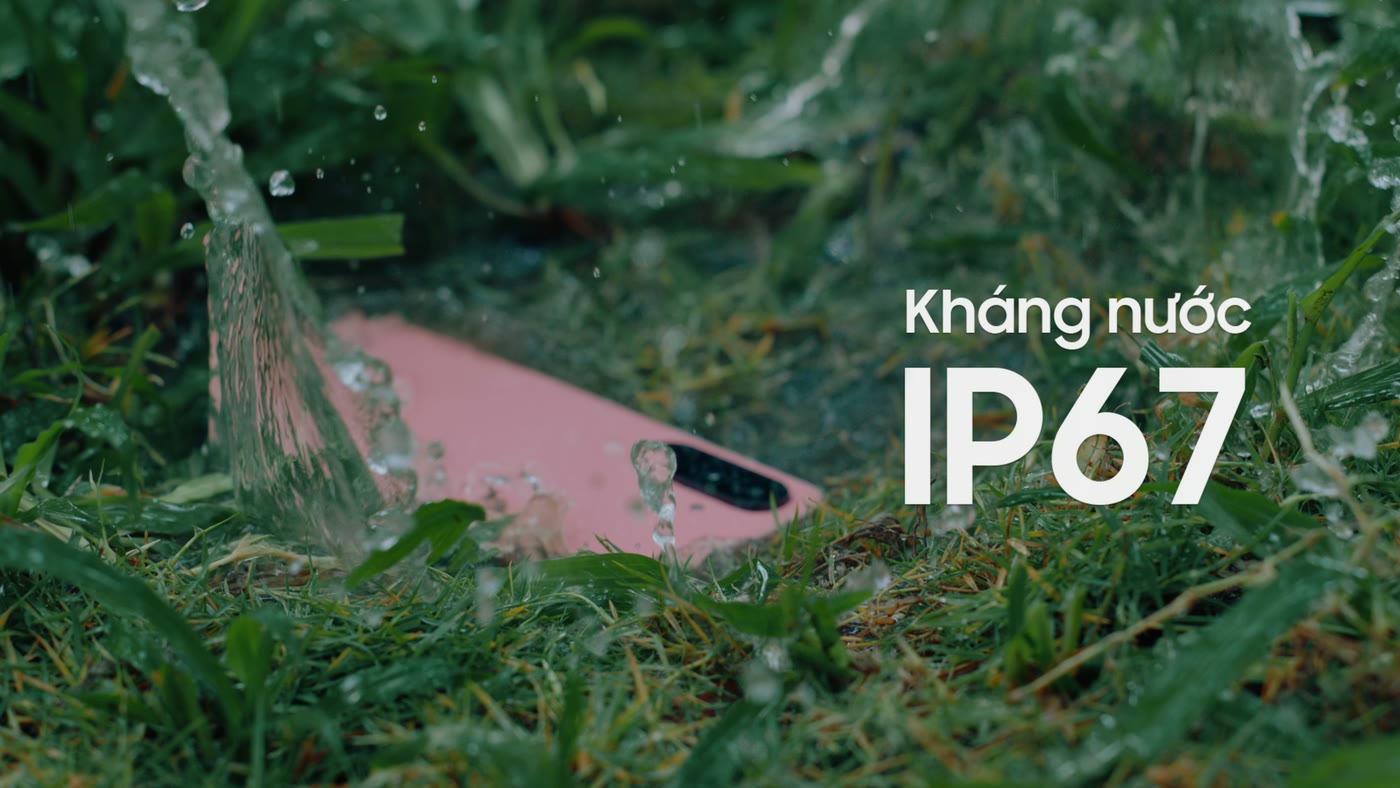
The product in the rain, in our Samsung Galaxy A film. Here the water is the claim: the phone is rated IP67.
Sound. A rain rig is loud. Dialogue under it is often re-recorded after the shoot, and the rain the audience hears is usually laid in the mix. Record a guide track anyway.
Practical rain or CG rain?
CG rain is easy to control, adds density to wide shots and fixes continuity. It cannot wet hair, clothes or the ground, and it cannot make people react.
Most films combine the two: practical rain where it touches people and the ground, CG to carry it into the background and the sky. Decide shot by shot at the storyboard stage, because rain in a close-up and rain over a wide or aerial shot are very different jobs. We compare the options in CGI vs live action vs AI.

The cat at the centre of our Samsung Galaxy A film, up a tree in the rain.
Planning a rain scene
Mark every wet shot on the board, and group them on the schedule.
Shoot the dry shots first if wardrobe and hair cannot be reset in time.
Allow fewer set-ups in a day. Resets, drying and moving the rain all take time.
In the south of Vietnam the rainy season runs from about May to November. Real rain may arrive on the day, and it has to be matched too.
Test the rain on camera, with the lights, before the shoot day.
The effects and the extra hours belong in the quote from the start. See how to read a video production quote.
Quick answers
Can you shoot in real rain?
You can, for atmosphere, but you cannot count on it starting, stopping or matching. In a commercial the rain in the frame is almost always rigged, sometimes on top of real rain.
Is a rain scene expensive?
The water is cheap. The cost is time, the rig, the water supply and the extra crew to run it safely. A close-up under one rain head is a small job. Rain over a wide shot or a crowd is a large one.
Does rain need VFX?
Not always. Close and medium shots work with practical rain. Wide shots, aerials and skies often use practical rain near the camera and CG beyond it.
Dream Media develops, directs, shoots and finishes brand films in-house in Ho Chi Minh City, rain and water effects included. See TVC and digital production.