
3D anamorphic billboards: how they work, what they need
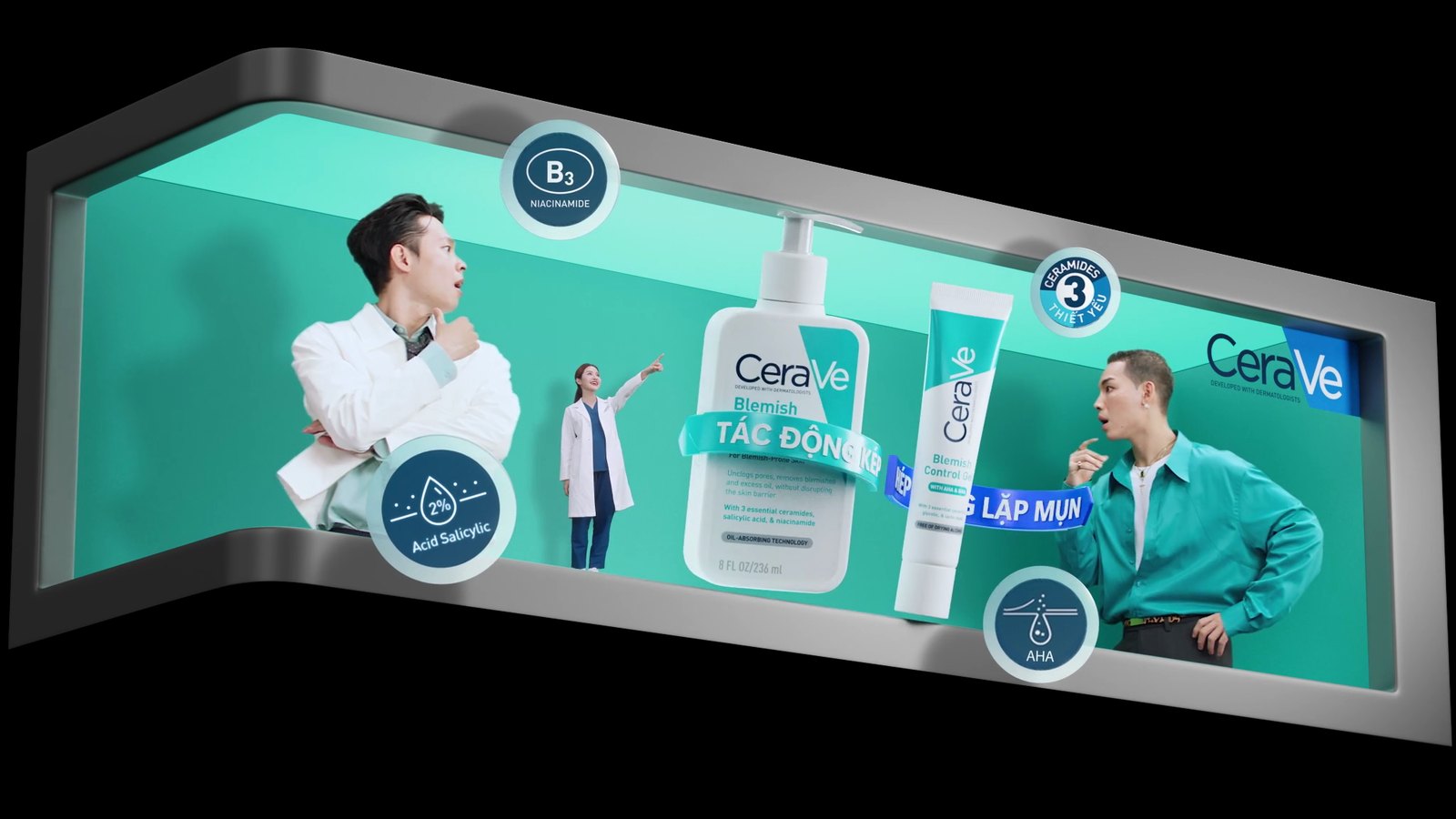
A 3D anamorphic billboard is a flat LED screen showing a picture that is only correct from one place on the street. Stand there and objects appear to push out of the building. Stand anywhere else and the picture is visibly bent.
Nothing about the screen is three-dimensional. All of the work is in the content.
How a 3D billboard creates the illusion
It is forced perspective, the same trick as a pavement drawing that looks like a hole from one angle.
The content is designed from a single viewing position. The animation is built in 3D, then distorted so that from that position its lines agree with the real building around the screen. The eye reads the screen as a box set into the wall.
Two devices do most of the work. A false frame is drawn inside the screen, so there is an edge for things to cross. Then objects break that frame: anything that passes in front of the drawn edge appears to leave the building.
Corner and curved screens, wrapped around a building, give the strongest effect, because the viewer sees real depth between the faces. A flat screen can still do it, more gently.
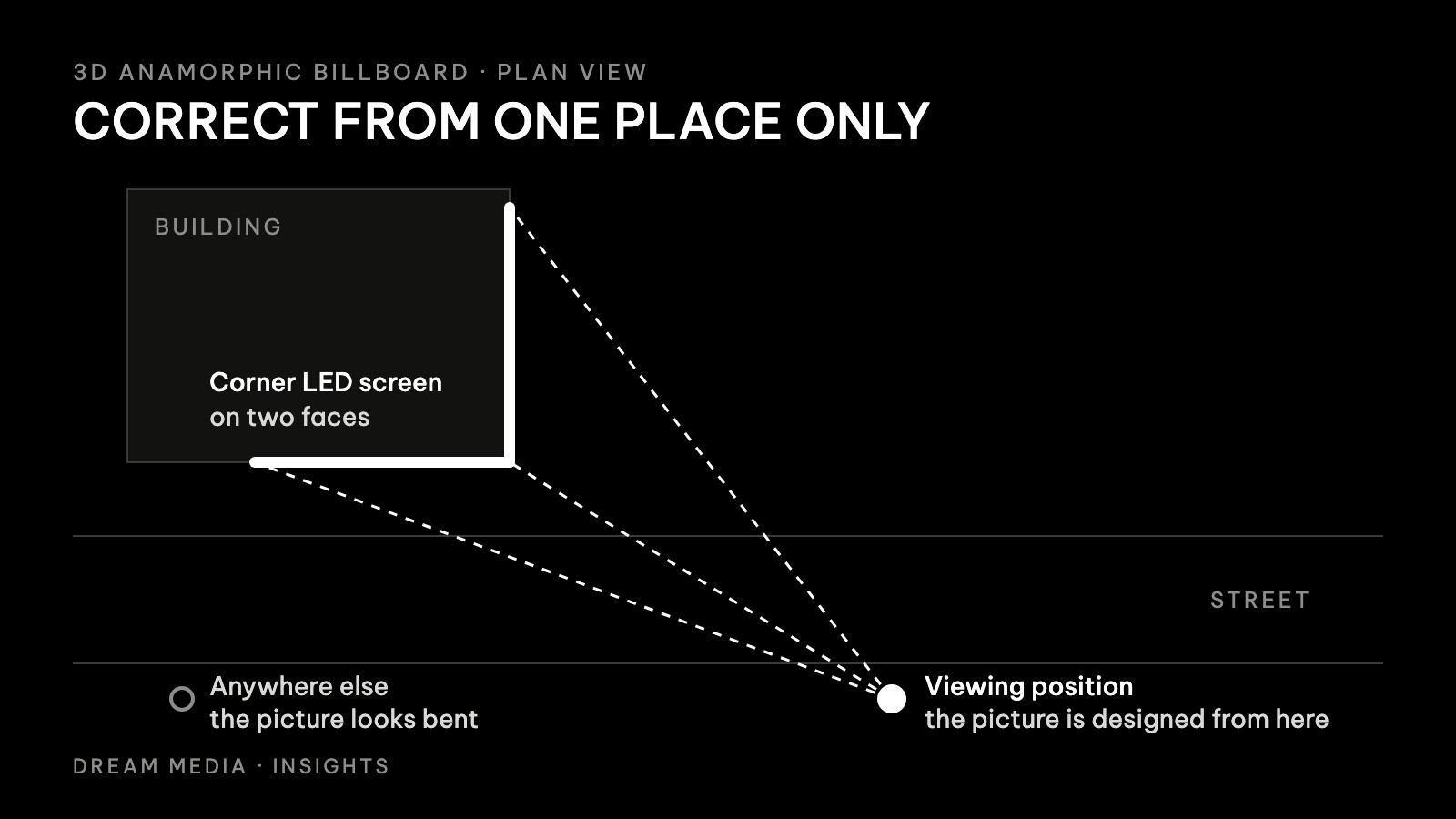
Plan view. The perspective is solved for one point across the street, and the picture only holds from there.
What the production needs before anyone designs
The exact screen. Pixel dimensions, physical size, the shape, and whether it turns a corner.
The viewing position. Where people actually stand: a crossing, a square, the pavement across the road. The perspective is solved from that point.
A model of the site. The building and the street are rebuilt in 3D, so the content can be checked from the viewing position before anything is rendered.
The loop. How long the slot is and how often it plays. Digital billboard slots typically run eight to fifteen seconds in a loop shared with other advertisers, and most are silent.
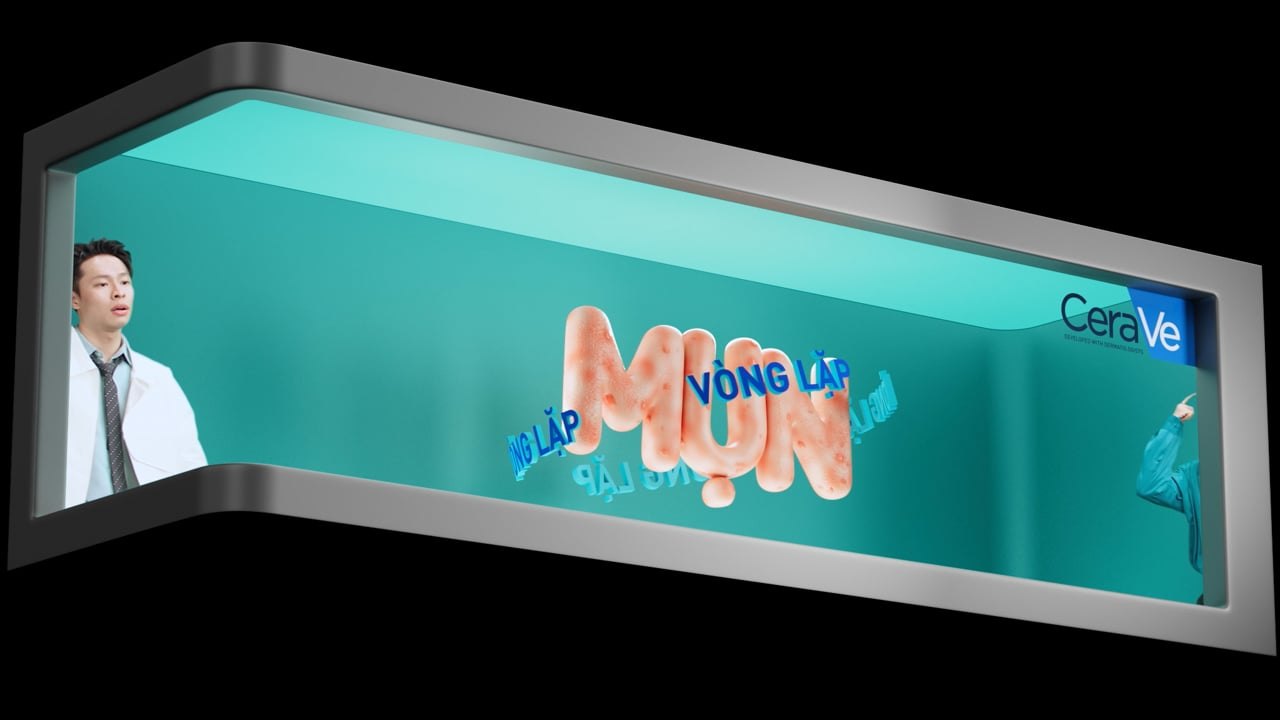
The false frame at work in our CeraVe 3D billboard: the screen is drawn as a box, so there is an edge for things to cross.
How our CeraVe billboard was made
We produced a 3D anamorphic billboard for CeraVe, for L'Oréal with Leo Burnett. It is the out-of-home piece of a campaign about the acne loop.
The cast stand inside the screen with the loop spelled out in letters between them. Then the cleanser and the gel push forward past the frame, ringed by the ingredients that break the loop.
It combines the two hard things in this format: real people and CG objects in one perspective. The cast have to be filmed with a camera position and a lens that match the virtual ones, or they look pasted in.
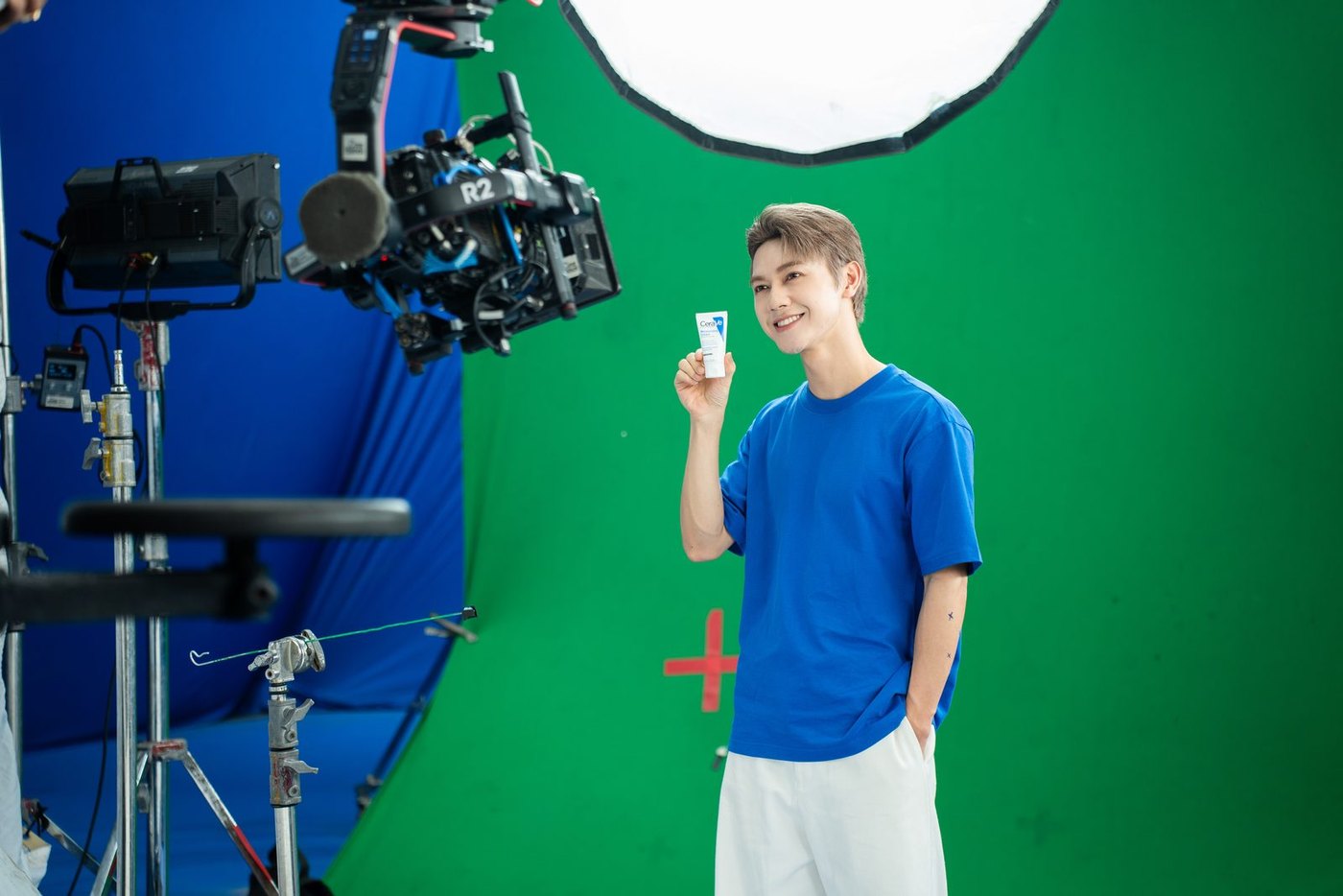
Filming against green on another CeraVe job. For a billboard, camera height and lens are matched to the virtual camera so that people and CG share one perspective.
What drives the cost of a 3D billboard
We will not give a number here, because the range is wide. These are the things that move it.
How much is CG. Product-only content is simpler than content with characters or liquids.
Live action. Filming people adds a shoot, and the matching work in compositing.
The number of screens. Each site has its own shape and viewing point. Content made for one has to be re-rendered and recalibrated for another, though the 3D assets can be reused.
Lead time. Modelling, animation and rendering take weeks. Rushing means more artists at once.
The media. The screen is booked separately, and well-known sites are booked far ahead.
For how CG compares with filming, see CGI vs live action vs AI.
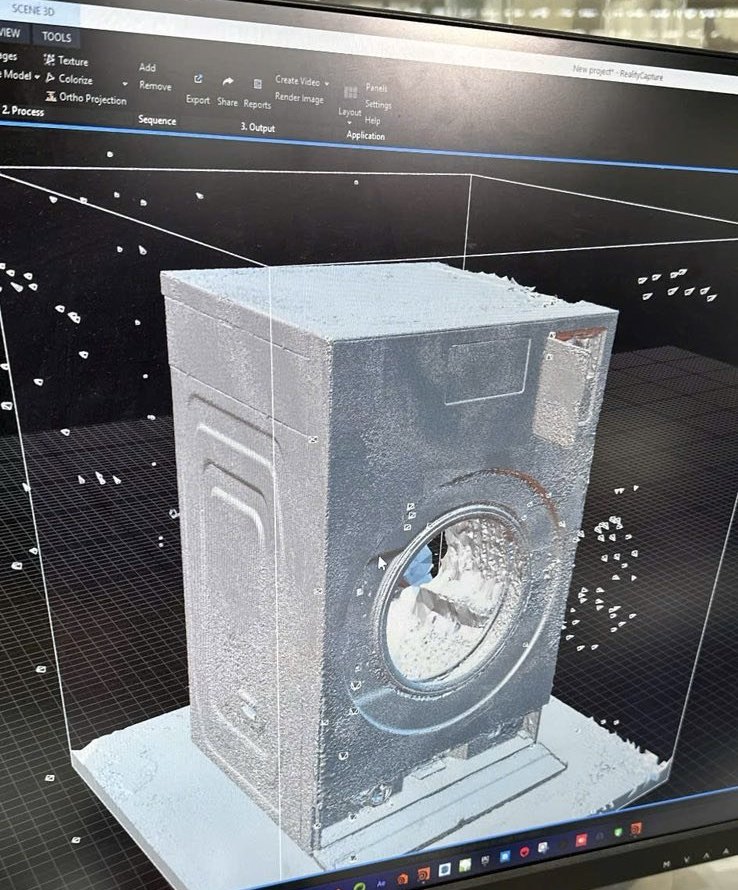
A Samsung Bespoke washing machine rebuilt in 3D from photographs for our polar bear film. CG products in a billboard start the same way, from scans or drawings.
The film of the billboard matters as much
The film of a 3D billboard often travels further than the billboard. The 3D cat above Shinjuku station in Tokyo is passed by about 190,000 people a day, and clips of it were shared around the world within days of launch. A film taken from the viewing position is what gets shared.
Plan it as a deliverable: a day and time with the right light, a fixed camera at the right spot, and people in frame for scale.
It is also the honest test. If the effect works in a render and not in a handheld video from the pavement, it does not work.
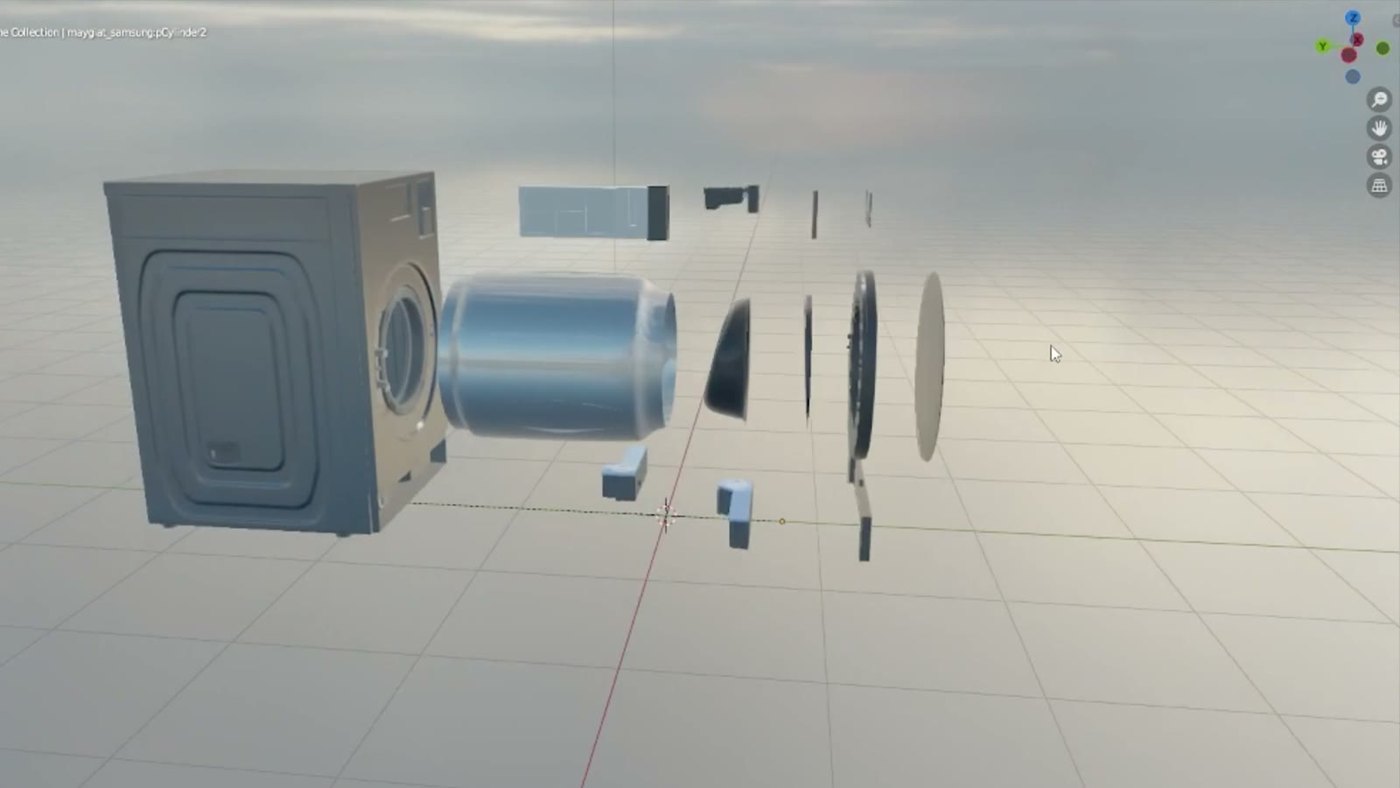
A washing machine taken apart in CG for our Samsung Bespoke AI film. Every object that leaves the frame in a 3D billboard has to be modelled like this.
When it is the wrong format
When the site has no single place to stand.
When the product needs explaining, because there is no sound and only a few seconds.
When the same content has to run on many ordinary screens, where it will simply look distorted.
It is a format for one strong image in one place. Sometimes, as we argued in PR stunt or brand film, that is exactly what the idea needs.
Quick answers
Does a 3D billboard need a special screen?
No. It runs on a standard LED screen. A corner screen strengthens the effect, but the illusion comes from the content.
How long does a 3D billboard take to produce?
Count in weeks, not days: modelling the site, building and animating the content, rendering, and testing on the screen.
Can the same 3D content run on any screen?
No. It is built for one screen and one viewing position. Another site needs its own render, though the 3D assets can be reused.
Dream Media develops, directs, shoots and finishes brand films in-house in Ho Chi Minh City.